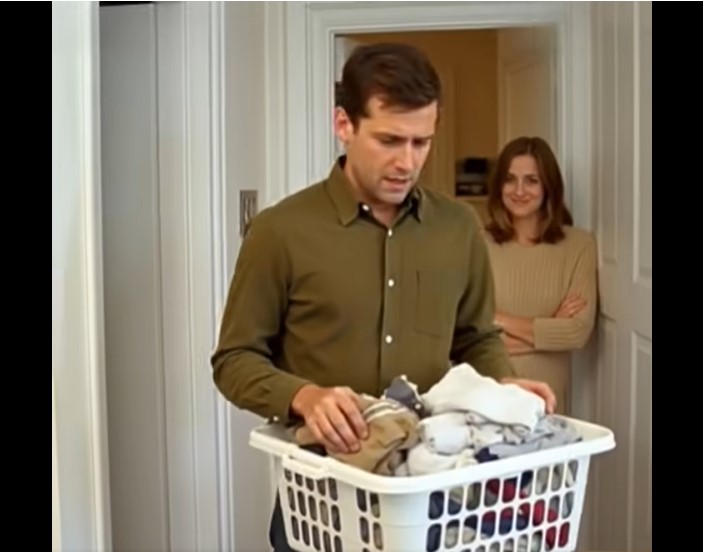
My husband asked for a divorce. He said, “I want the house, the cars, everything—except the son.” – StoryV
When my husband asked for a divorce, he didn’t raise his voice.
We were sitting at the kitchen island in the house I had helped design—the one with the skylight he loved showing off. He folded his hands and said calmly, “I want the house, the cars, the savings. Everything.”
Then he added, almost as an afterthought, “You can keep the son.”
Not Ethan. Not our eight-year-old who was upstairs doing math homework. Just “the son,” like he was an unwanted piece of furniture.
I didn’t cry. Daniel had always mistaken emotion for weakness.
A week later, I repeated his demands to my lawyer, Margaret Collins. She stared at me in disbelief.
“Emma, this is absurd. You’re entitled to half. More, considering custody. We can fight this.”
“I don’t want to,” I said. “Let him have it all.”
She lowered her voice. “Why?”
Because the fight that mattered had already happened—and Daniel didn’t even realize it.
For twelve years, he underestimated me. He handled the big purchases, insisted on the larger mortgage, upgraded cars every two years, refinanced whenever it suited his image. What he never noticed was that I handled the details. I read every contract. I tracked every payment. I knew exactly how leveraged we were.
The house looked impressive. It was also drowning in debt.
At mediation, I didn’t argue. I didn’t negotiate. I signed wherever they pointed. Daniel looked almost giddy. He was already picturing himself alone in the big house, free from family responsibility except a manageable child support check.
Friends thought I’d lost my mind. My sister begged me to reconsider. Even Margaret tried one last time before the final hearing.
“There has to be a reason,” she said quietly.
“There is,” I told her.
The judge reviewed the agreement with a raised eyebrow. “Mrs. Turner, you understand you are relinquishing claim to the marital home, vehicles, and shared accounts?”
“Yes, Your Honor.”
Daniel smiled—wide, victorious.
I signed.
Then his lawyer leaned toward him, flipping to the final pages. Her expression shifted. The confidence drained from her face.
“Daniel,” she whispered sharply, “did you review the addendum?”
His smile faltered. “What addendum?”
She handed him the document. He scanned it once. Then again. Color left his face.
The clause was simple but airtight: Daniel would assume full ownership of the house, vehicles, and all associated liabilities—mortgage, property taxes, maintenance costs, car loans, credit lines. No shared responsibility. No fallback.
In addition, child support would be calculated based on the lifestyle he insisted on maintaining, not on a reduced post-divorce income. If he defaulted on any major financial obligation within twelve months, the primary assets would be subject to forced sale, with net equity placed in a protected trust for Ethan.
In other words: he could keep everything—if he could afford everything.
And I knew he couldn’t.
Daniel’s income looked impressive on paper, but it fluctuated. Mine had been the stable one. Without it, the numbers didn’t work. The mortgage alone was suffocating. The cars were leased at premium rates. The property taxes had just increased.
He had demanded the kingdom without understanding the cost of the crown.
In the hallway outside the courtroom, he cornered me.
“You set me up,” he hissed.
“No,” I said calmly. “You asked for everything. I agreed.”
Within six months, the cracks showed. The second car was returned first. Then came the missed mortgage payment. He tried refinancing again but no bank would ignore the new debt-to-income ratio.
By month ten, the house went on the market.
It sold, but not for what he’d expected. After fees and penalties, very little remained. The trust for Ethan received what equity survived.
Meanwhile, Ethan and I had moved into a smaller home across town. No skylight. No marble countertops. But it was peaceful. Affordable. Ours.
Without tension filling the walls, Ethan changed. He laughed more. Slept better. His teacher told me he seemed lighter.
Daniel called less often. When he did, the arrogance was gone. Reality has a way of sanding down pride.
Margaret met me for coffee one afternoon and shook her head with quiet admiration. “He thought he was winning,” she said.
“He was,” I replied. “Just not the game he imagined.”
I never wanted the house. Or the cars. Or the illusion.
I wanted stability. I wanted freedom. I wanted my son to grow up in a home where he was called by his name.
Daniel walked away with everything.
Ethan and I walked away with what mattered.






Post Comment