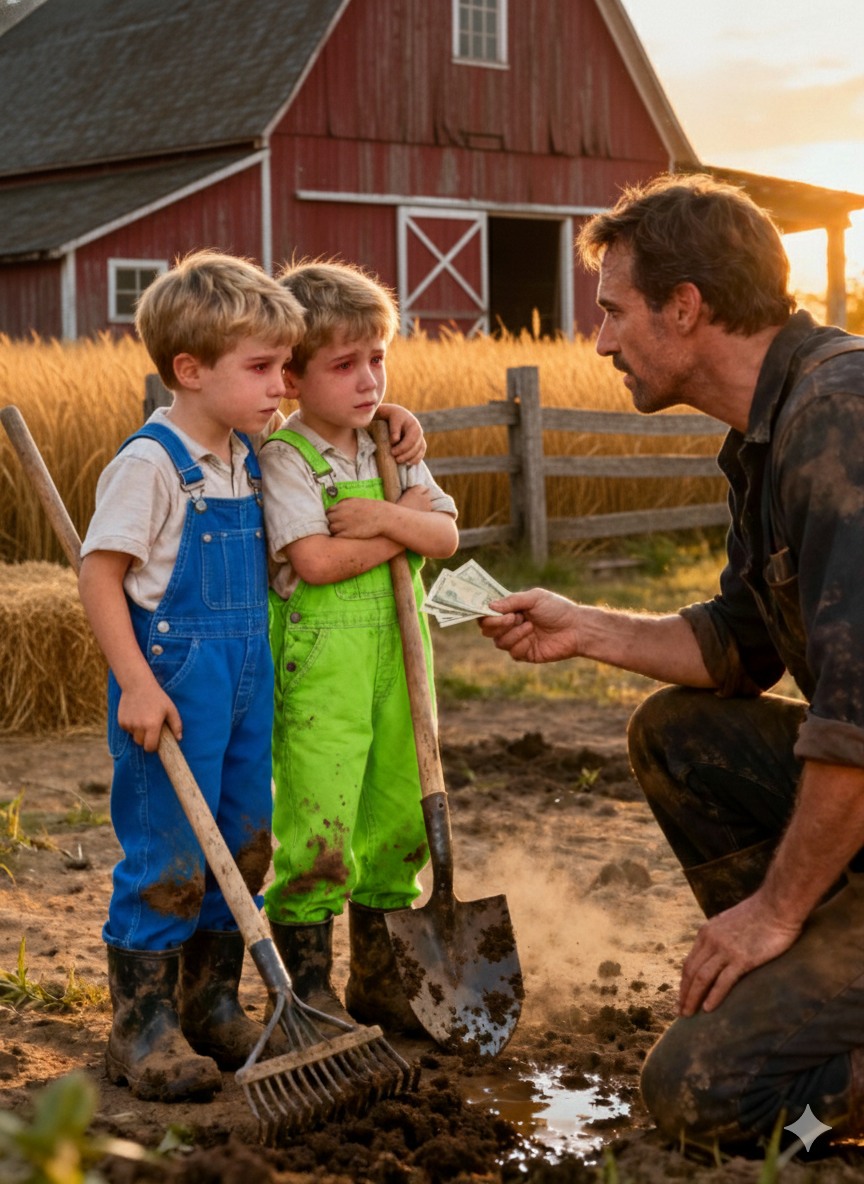
They Asked for $150 to Clean My Yard — It Ended Up Being About More Than Money The Saturday I Thought I Was Just Paying for Yard Work – Story
That Saturday morning was supposed to belong to me.
No alarm. No emails. No meetings that began with, “Do you have a minute?” Just coffee, a quiet house, and a game on TV. The light through the kitchen window was soft and unhurried, and I planned to be the same.
My yard, however, had other ideas. The grass had grown wild, leaves collected in stubborn corners, and weeds were staging a full takeover. I noticed it. I ignored it. That day wasn’t about productivity.
Then the doorbell rang.
Two boys stood on my porch. Thin. Sun-browned. One wore a faded baseball cap; the other held a rake that looked heavier than he was. Eleven, maybe twelve years old.
The taller one removed his cap. “Good afternoon, sir. Would you like us to clean your yard? We’ll pull weeds, sweep, and haul everything away. One hundred fifty dollars.”
He said it like he’d practiced it a dozen times—quickly, carefully, before courage could disappear.
I looked at my yard. It wasn’t a small job. At least three hours of hard work under the sun.
“One fifty each?” I asked.
The younger one shook his head immediately. “No, sir. Total. That’s fine for us.”
That’s fine for us.
I really saw them then—the worn sneakers, rough hands, the kind of alertness kids get when they know money matters. They weren’t playing business. They needed it.
“Alright,” I said. “You’ve got the job.”
They started immediately. No phones. No complaints. Just steady work.
They didn’t just trim what showed—they pulled weeds from the roots. They swept every corner. They even cleared debris from the sidewalk beyond my fence.
“You don’t have to do that,” I called.
“It’ll look right that way,” the taller boy said.
Not “good enough.”
Not “done.”
Right.
I sat on the steps with my coffee growing cold and watched something I hadn’t expected: pride. Care. Effort without supervision. In a world that often rewards shortcuts, these boys were doing the job properly simply because it deserved to be done properly.
When they finished, they knocked. Sweat soaked their shirts. Dirt streaked their hands. But they stood straight.
I pulled out my wallet and handed them six hundred dollars.
The taller one blinked. “Sir, I think there’s a mistake. We said one fifty.”
“There’s no mistake,” I said. “You charged for labor. But you worked like professionals.”
They were quiet, listening.
“Don’t underprice yourselves,” I added. “If you do something well, charge what it’s worth. The world will try to discount you. Don’t do it to yourselves first.”
The younger one gripped the bills like they might vanish. “Thank you,” he whispered.
I closed the door thinking that was the end of it.
It wasn’t.
Two weeks later, the doorbell rang again. The older boy stood there alone.
“My brother’s sick,” he said. “I was wondering if you had any work.”
I gave him water and asked about his family. That’s when he told me their father had died the year before. Their mother cleaned houses. They worked whenever they could to help.
He hesitated before saying, “When we brought home the six hundred, my mom cried. She said no one had ever paid us like that. She said maybe things weren’t as hopeless as they felt.”
That was the moment I understood.
It hadn’t been charity.
It had been acknowledgment.
After that, they returned often. They raised their prices. They stopped apologizing for them. They learned how to say no to people who tried to bargain them down.
Years passed. I later heard one studied accounting. The other started a landscaping company of his own.
As for me, that Saturday quietly rearranged something inside me.
I had planned to spend the day avoiding responsibility. Instead, I was reminded what real responsibility looks like—doing a job well, valuing your effort, and recognizing it in others.
They asked for $150 to clean my yard.
What they really gave me was a lesson about worth—both theirs and mine.






Post Comment