5 Garden Tool Mistakes That Are Costing You $200 a Year
Think you’re caring for your garden tools? Think again!
Many of us believe we’re giving our garden tools the love they deserve, but all too often, simple mistakes can lead to their premature demise. Grandma always said, ‘A stitch in time saves nine,’ and this couldn’t be truer when it comes to gardening equipment. Taking proper care of your tools not only ensures they last longer but can also save you money in the long run.
Companion planting can increase vegetable yield by 20-30% without extra effort. But if your tools are rusty and broken, that yield won’t matter much. Let’s explore the common garden tool care mistakes that might be ruining your equipment.
1. Neglecting to Clean Your Tools
Here’s a simple truth: dirty tools can lead to poor plant health. If you’re not cleaning your garden tools after each use, you’re inviting dirt and diseases to ruin your garden. Soil left on tools can carry pathogens that spread to your plants.
- After using your tools, simply rinse them off with water.
- For stubborn soil, scrub them with a stiff brush.
- Wipe metal parts with a cloth to remove moisture and prevent rust.
This alone makes the biggest difference: a clean tool works better and lasts longer. Grandma never skimped on cleanliness; she always said, ‘You wouldn’t cook with dirty pots, so why garden with dirty tools?’
2. Storing Tools Improperly
Have you ever tossed your tools haphazardly into a shed or garage? Stop right there! Improper storage can lead to tool damage and rust. Instead of piling them up, give each tool a designated place.
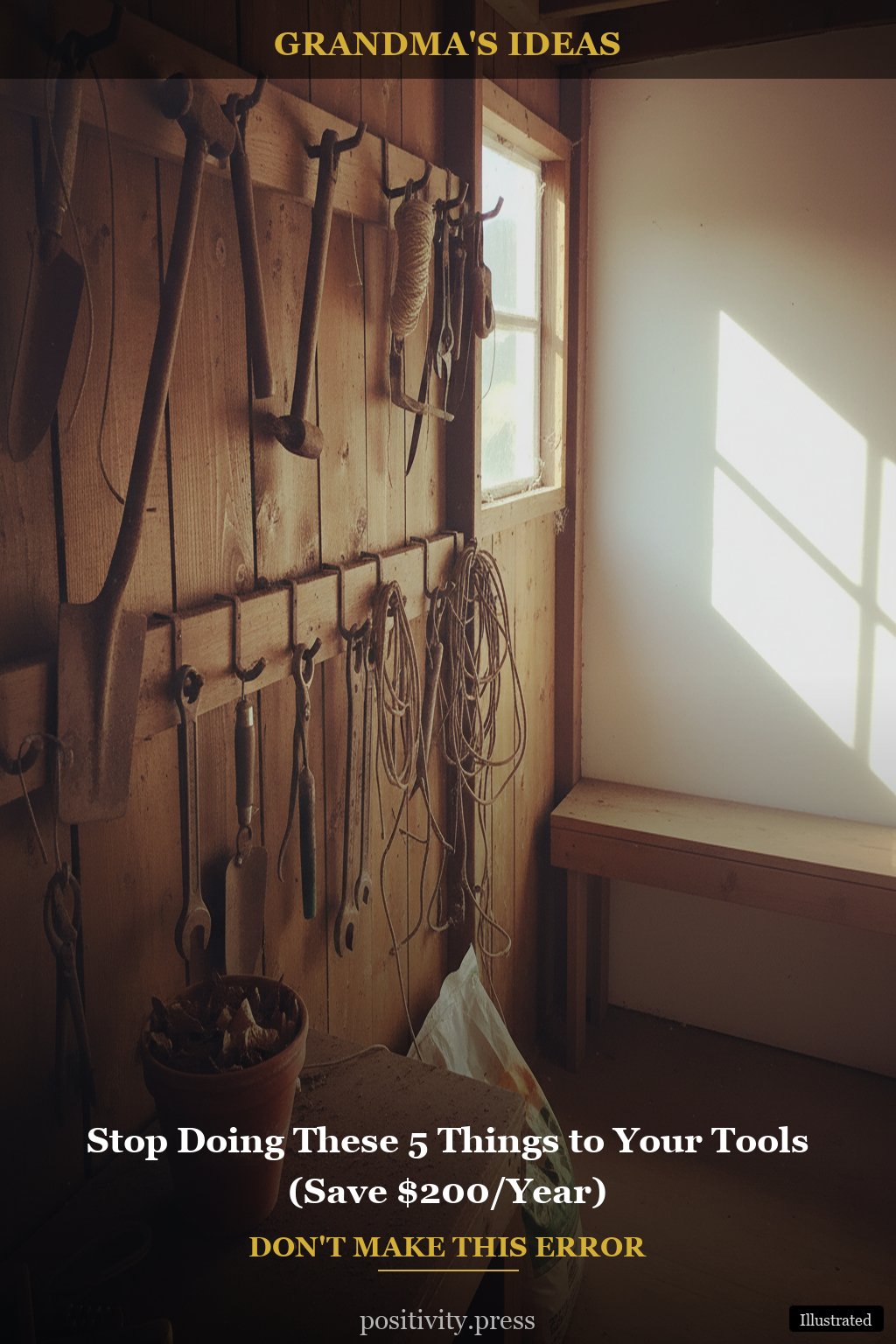
- Hang tools on a pegboard or wall hooks to keep them dry and accessible.
- Store smaller tools in a toolbox or a sturdy container.
- Keep wooden handles away from moisture to prevent splitting.
The real secret is actually this: proper storage saves you time and money. Spending a few moments organizing your tools can prevent costly replacements down the road.
3. Ignoring Rust Prevention
Rust is a tool’s worst enemy, and ignoring it can lead to irreversible damage. If you notice rust starting to form, it’s time to take action! A little prevention goes a long way in maintaining your equipment’s longevity.
- After cleaning your tools, apply a thin layer of vegetable oil to metal parts.
- Store tools in a dry place to minimize moisture exposure.
Grandma always had her homemade remedies for rust prevention. Using what you already have at home can save your tools from becoming a rusty relic.
Pin this for the next time you feel stuck.
4. Skipping Regular Maintenance
Just like your car needs regular oil changes, your garden tools need maintenance too. Failing to inspect and repair them can lead to bigger problems down the line.
- Check for loose screws or bolts and tighten them as needed.
- Sharpen blades regularly to ensure they cut cleanly and efficiently.
- Replace worn-out parts instead of buying new tools.
This is the step that separates good from great: staying on top of maintenance ensures your tools are always ready for action. Grandma had a toolbox full of spare parts, always ready to fix whatever broke.
5. Using the Wrong Tool for the Job
It’s tempting to use whatever tool is closest, but using the wrong tool can lead to damage. Each tool has a specific purpose, and using it incorrectly can ruin its functionality.
- Familiarize yourself with each tool’s intended use.
- Invest in versatile tools that can handle multiple tasks.
When Grandma was gardening, she never forced a tool to do a job it wasn’t made for. This simple fix can save you from unnecessary wear and tear.
The Biggest Mistake People Make
Perhaps the greatest mistake people make with garden tools is assuming they can just buy new ones when old ones fail. This mindset not only leads to unnecessary spending but also contributes to a throwaway culture that harms our environment.
Conclusion
Taking care of your garden tools doesn’t have to be complicated or expensive. By avoiding these garden tool care mistakes, you can extend the life of your equipment and save money. Remember, it’s the little things that make a big difference. Just like Grandma always reminded us, simple solutions are often the best.
Estimated savings: $30–$50 per project (vs $75+ retail).
Do one small thing today — tomorrow do another.
You might also enjoy: rustic DIY coffee table projects
You might also enjoy: budget family dinner recipes under $10






Post Comment