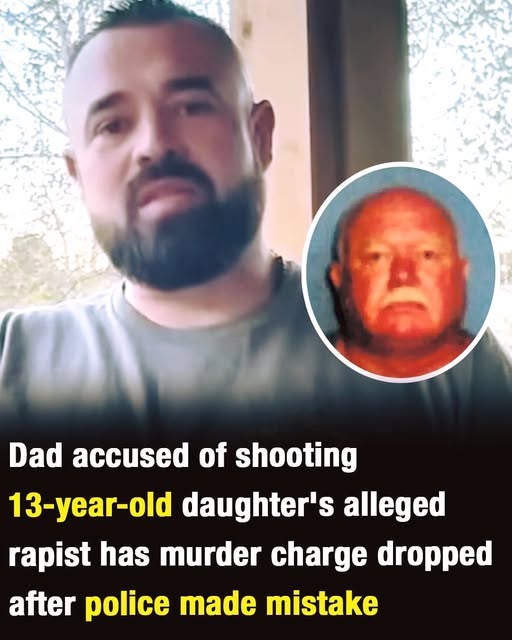
Second-Degree Murder Charge Against Aaron Spencer Dismissed as Case Takes a New Turn (Check first in all comments)
An Arkansas judge has dismissed murder charges against Aaron Spencer, an Army veteran and sheriff candidate in Lonoke County, following a controversial case involving the fatal shooting of a man accused of sexually assaulting Spencer’s teenage daughter. The decision brought a dramatic turn to a case that had drawn significant public and media attention across the state. Spencer had originally been charged with second-degree murder after the October 2024 shooting death of 67-year-old Michael Fosler.
According to court records and statements from prosecutors, the incident occurred late at night on October 8, 2024, when Spencer reportedly discovered Fosler alone with his teenage daughter inside a pickup truck in Lonoke County. Authorities stated that Spencer pursued the vehicle, forced it off the road, and then called emergency services to report the shooting.
Court Decision and Judge’s Ruling
The case was reviewed by Judge Ralph Wilson Jr., who ultimately decided to dismiss the charges on Thursday. The judge stated that the actions of law enforcement during the investigation played a critical role in the ruling, particularly concerning how certain digital evidence was handled.
According to the court’s findings, the handling of dash-camera footage and the associated SD card from Spencer’s vehicle was significantly flawed. The court described the loss of the SD card as a serious issue that may have contained key video evidence relevant to Spencer’s defense. The judge noted that the destruction or misplacement of such evidence created an unfair disadvantage for the defendant.
In his ruling, Judge Wilson emphasized that dismissal of criminal charges is an extremely rare and serious measure. However, he concluded that the circumstances of this case met that threshold due to what he described as “egregious” conduct by law enforcement in handling crucial evidence.
Evidence Handling Concerns Raised by the Defense
Spencer’s legal team argued that the missing SD card may have contained video footage of the confrontation, which could have been essential in determining the events leading up to the shooting. They further claimed that authorities failed to properly document when the evidence went missing or how it was lost during the investigation process.
The judge agreed that the loss of the internal memory card from the dash camera had a direct impact on Spencer’s ability to present a full defense. According to court documents, this missing evidence affected his ability to support claims related to self-defense and other legal arguments central to the case.
The defense maintained that the mishandling of evidence violated Spencer’s right to a fair trial, ultimately contributing to the court’s decision to dismiss the charges before they could proceed to a jury.
Background of the Shooting Incident
Court records indicate that the victim, Michael Fosler, had previously faced multiple sexual offense charges involving Spencer’s teenage daughter. Reports also noted that Fosler was out on bond at the time of the fatal encounter in October 2024.
According to prosecutors, Spencer encountered Fosler inside a vehicle with his daughter, which led to a confrontation. The situation escalated quickly, resulting in Spencer firing the fatal shot. Spencer did not deny that he was responsible for the shooting, but he maintained that his actions were not criminal and were connected to protecting his child.
The case raised complex legal questions about self-defense, parental protection, and the limits of justified force, all of which were expected to be central issues in the upcoming trial before the charges were dismissed.
Political Background and Public Attention
Prior to the incident gaining national attention, Aaron Spencer had recently entered the political spotlight. In February, he won the Republican primary for Lonoke County sheriff, defeating the incumbent. His campaign focused on law enforcement reform and addressing issues within the local justice system.
During his campaign, Spencer spoke publicly about his personal experiences and his views on law enforcement accountability. In a campaign video, he stated that his own legal battle had shown him failures within both policing and the court system. He emphasized his commitment to ensuring that others would not face similar experiences.
The case involving his daughter and the subsequent shooting added further complexity to his public image, drawing both support and criticism from different segments of the community.
Defense Argument and Legal Position
Spencer’s legal team consistently argued that the shooting was an act of protection rather than a criminal act. His attorney, Erin Cassinelli, expressed relief following the judge’s decision to dismiss the charges, stating that no family should be forced to endure a trial under such circumstances.
The defense also argued that the prosecution’s case was significantly weakened by the loss of key evidence. They maintained that without the missing footage, Spencer’s constitutional right to a fair defense was compromised.
Although Spencer admitted to shooting Fosler, he pleaded not guilty to murder charges throughout the legal process. His position remained that the incident occurred in a highly emotional and defensive context involving the safety of his child.
Upcoming Trial and Case Closure
The case had been scheduled to go before a jury on June 22, where both sides were expected to present detailed arguments and evidence. However, the judge’s decision to dismiss the charges effectively ended the criminal proceedings before trial.
The ruling has since sparked public discussion about law enforcement procedures, evidence handling, and the legal boundaries of self-defense cases involving family protection. Supporters of Spencer argue that the decision reflects a failure in the investigation process, while others view the case as a reminder of the complexity surrounding use-of-force incidents.
With the charges now dismissed, Aaron Spencer’s legal situation has shifted significantly, though the broader public debate surrounding the case is likely to continue.






Post Comment