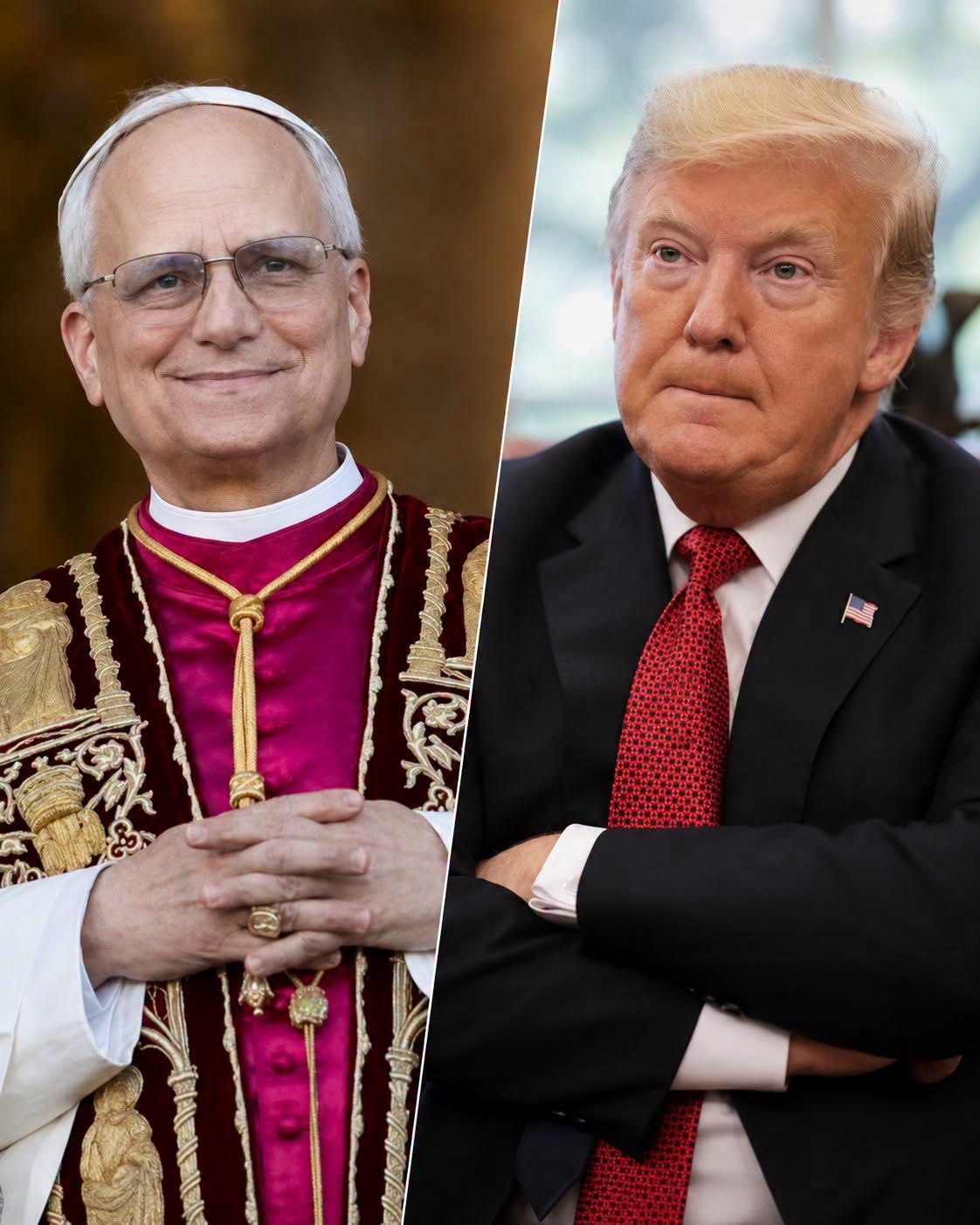
“The new Pope is NOT a fan of Donald Trump! See his tweets..
Since his election as Pope Leo XIV, the first American to lead the Catholic Church, renewed attention has focused on his past comments and reported social media activity regarding immigration. Long before ascending to the papacy, Robert Prevost was associated with messages that appeared to support a more compassionate approach to migration while questioning some of the stricter immigration policies advocated by prominent American political figures. His previous remarks have become increasingly significant as Catholics, political leaders, and commentators examine how his background may influence his leadership of the global Church.
Much of the discussion has centered on reported social media posts linked to Prevost before he became pope. Several of these posts expressed concern for migrants and refugees while emphasizing the moral responsibility to treat them with dignity and compassion. Others appeared to challenge political rhetoric that defended tougher immigration policies, particularly when such positions were presented as being consistent with Christian teachings.
Among the figures mentioned in discussions surrounding these posts is U.S. Vice President JD Vance. Some reported messages criticized interpretations of Christianity that were used to justify restrictive immigration measures, suggesting that Christian values should prioritize care for vulnerable people regardless of their nationality or immigration status. These exchanges sparked debate about the relationship between faith, politics, and public policy, particularly within the United States.
Former President Donald Trump’s immigration agenda has also featured prominently in conversations about Pope Leo XIV’s earlier views. Posts reportedly connected to his account referenced controversial policies implemented during the Trump administration, including family separation at the U.S.-Mexico border and expanded deportation efforts. Those messages reflected concern for the humanitarian consequences of such policies and reinforced longstanding Catholic teachings that call for the protection of migrants while recognizing the right of nations to maintain secure borders.
The election of the first American pope has added another layer of interest to these discussions. Unlike previous popes who primarily approached U.S. politics from afar, Pope Leo XIV brings firsthand experience of American social and political debates. As a result, his earlier statements are being examined not only as personal opinions but also as potential indicators of how he may approach issues involving migration, human rights, and international cooperation during his papacy.
Observers note that the pope now occupies a unique position in global affairs. While he is expected to remain above partisan politics, every public statement he makes carries significant moral influence. His previous comments on immigration have therefore taken on greater symbolic importance, particularly in the context of ongoing debates over border security, asylum policies, and humanitarian responsibilities.
Since assuming the papacy, Pope Leo XIV has continued to stress themes that align with long-standing Catholic social teaching. In his public addresses, he has emphasized the dignity of every human person, including migrants and refugees, while encouraging governments and communities to respond with compassion and respect. Rather than advocating specific political policies, his remarks have focused on the ethical principles of protecting vulnerable individuals, promoting human dignity, and fostering solidarity across national boundaries.
His approach reflects the broader tradition of the Catholic Church, which supports both the legitimate right of countries to regulate their borders and the obligation to treat migrants humanely. This balance has often placed Church leaders at the center of public debates, particularly when political leaders adopt policies viewed by some religious groups as lacking compassion.
The renewed attention surrounding Pope Leo XIV’s past statements also highlights broader tensions within American politics and Catholicism. Immigration remains one of the country’s most divisive issues, and many Catholics hold differing views on how Church teachings should be applied to modern border policy. While some emphasize national sovereignty and law enforcement, others prioritize humanitarian concerns and the Church’s longstanding commitment to welcoming those in need.
As Pope Leo XIV begins his leadership of more than a billion Catholics worldwide, his previous comments continue to generate discussion far beyond the United States. Whether viewed through a political, religious, or humanitarian lens, his emphasis on the dignity of migrants has become an important part of the conversation surrounding his papacy. Moving forward, his words and actions are likely to remain influential as global leaders and faithful alike navigate one of the most challenging moral and political issues of the modern era.





Post Comment