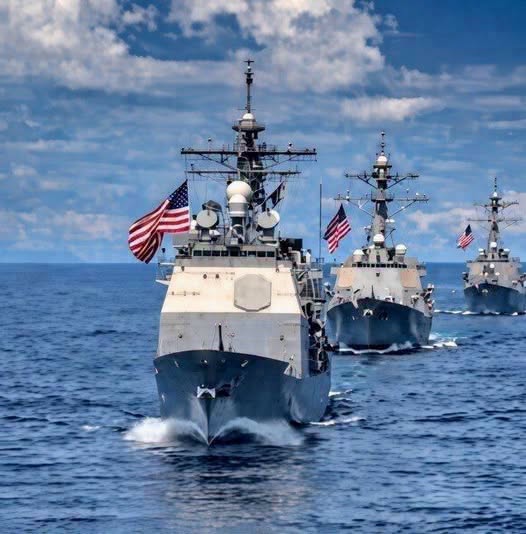
Breaking News: The U.S. Launches the War…See more
The war between the United States, Israel, and Iran represents one of the most consequential geopolitical crises of 2026. The conflict emerged from decades of tension involving Iran’s nuclear and missile programs, Israel’s security concerns, U.S. sanctions, regional proxy conflicts, and repeated confrontations across the Middle East.
The major escalation began on February 28, 2026, when U.S. and Israeli forces launched coordinated strikes against Iranian military and strategic targets. Iran responded with ballistic missiles and drones aimed at U.S. and allied positions across the region. The fighting soon extended beyond Iran and Israel, involving Iranian-aligned militias in Iraq, Hezbollah in Lebanon, and heightened military activity around the Gulf.
The conflict has also created serious international consequences. Concerns over disruption to oil supplies and shipping through the Strait of Hormuz have contributed to energy-market volatility, while financial markets have reacted to the growing geopolitical uncertainty. Governments across Europe, Asia, and the Middle East have called for restraint and diplomatic efforts to prevent the conflict from becoming a wider regional war.
The humanitarian consequences have been severe. Civilian casualties, damage to infrastructure, displacement, and disruptions to essential services have added to an already difficult regional situation. Meanwhile, competing media narratives and political debates have raised questions about international law, military authorization, sovereignty, and the effectiveness of diplomacy.
Ultimately, the conflict’s future remains uncertain. Whether it develops into a prolonged regional war or eventually moves toward negotiations will depend on military developments, international pressure, and the willingness of the parties involved to pursue a diplomatic solution. Its consequences, however, are already being felt far beyond the Middle East.






Post Comment