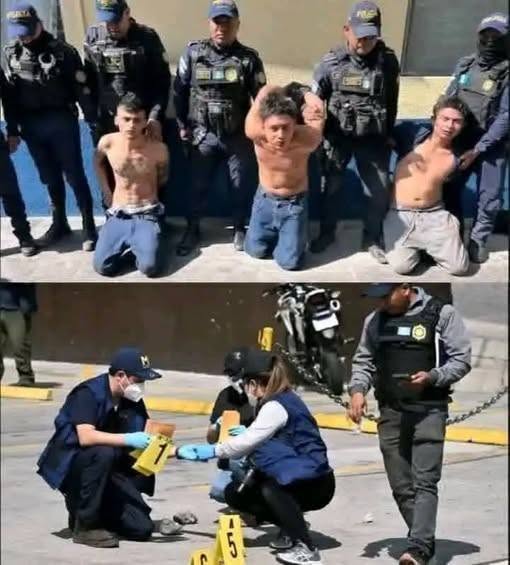
The most dangerous crim!nals have been captured… See more
Guatemala has entered a tense new phase in its fight against organized crime after President Bernardo Arévalo announced a 30-day state of emergency following a violent weekend involving prison uprisings and attacks on police officers.
The emergency declaration came after inmates at three separate prisons reportedly took guards hostage in coordinated incidents. Authorities regained control of all three facilities and secured the release of the hostages, but the violence continued outside the prison system. Eight police officers were killed in attacks that officials described as retaliation for the government’s recent efforts to tighten control over criminal organizations.
The government has responded by expanding the powers of national police and military forces, allowing them to conduct broader operations against criminal networks. Schools were also temporarily suspended as a precaution while authorities worked to stabilize affected areas.
The crisis highlights the longstanding challenges Guatemala faces in confronting organized crime and corruption. Criminal groups have developed significant influence within the country’s prison system, with authorities arguing that some incarcerated gang leaders have previously maintained the ability to direct operations from behind bars.
President Arévalo, who came to power promising institutional reform and stronger action against corruption, has presented the emergency measures as part of a broader effort to restore government control. His administration has also indicated an interest in working with international law-enforcement partners to disrupt criminal networks.
However, the emergency declaration comes with significant risks. Expanded security powers can help authorities respond quickly to violence, but they also require strong oversight to prevent abuses and protect civil liberties.
The immediate priority is restoring security and protecting communities, but lasting progress will depend on reforms to prisons, law enforcement, courts, and anti-corruption institutions. The coming weeks will therefore be an important test of whether Guatemala can confront organized crime while maintaining public trust and democratic accountability.






Post Comment