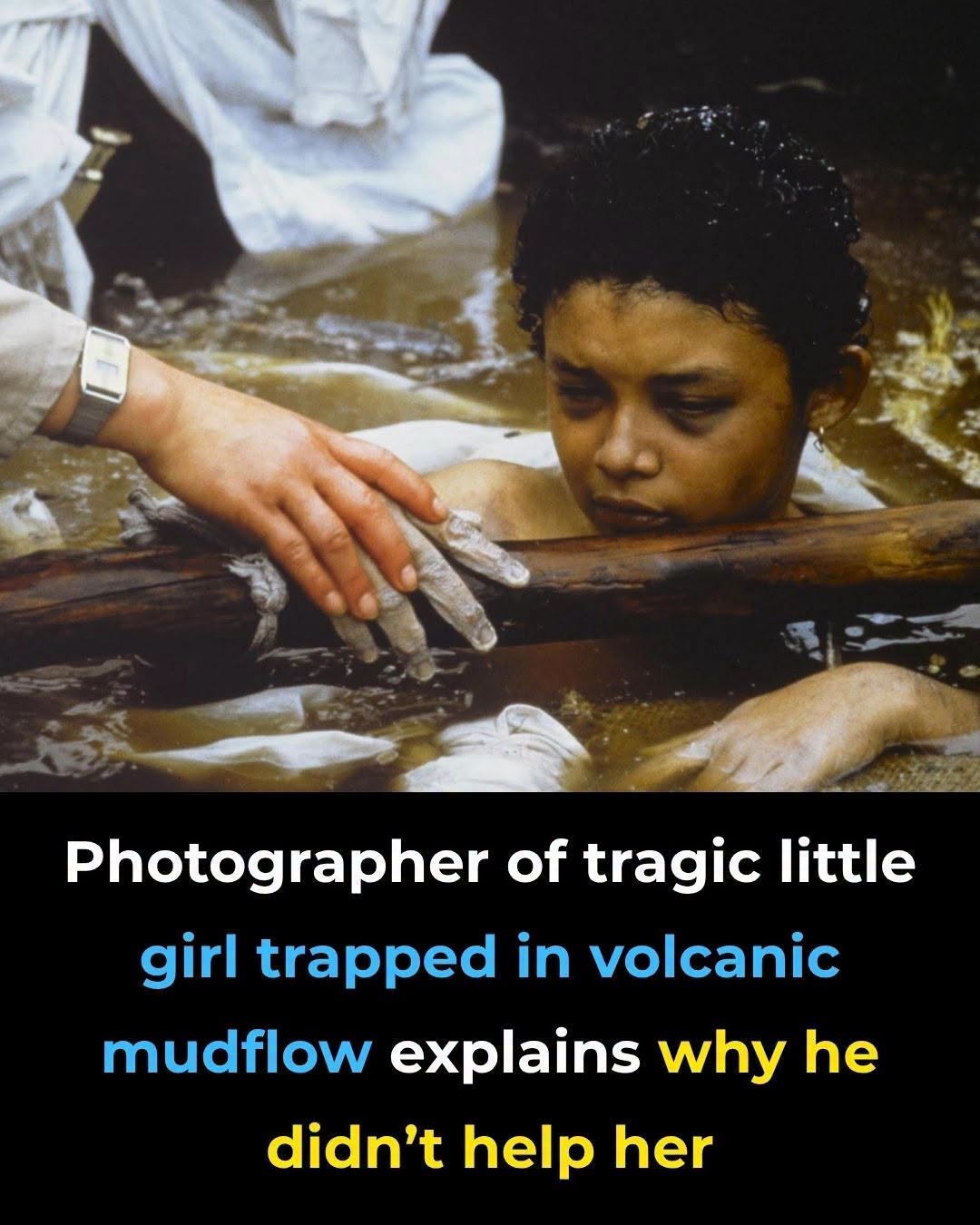
She was stuck for 60 hours and the photo has become historic.
On November 13, 1985, the eruption of Colombia’s Nevado del Ruiz volcano triggered enormous lahars—fast-moving mixtures of volcanic debris, mud, and water—that devastated the town of Armero. Approximately 25,000 people died, making it one of the deadliest volcanic disasters of the 20th century.
Among the victims was 13-year-old Omayra Sánchez. Trapped beneath the remains of her home, Omayra was pinned by debris and unable to escape. Rescuers worked around her for roughly three days, but the conditions made freeing her extraordinarily difficult. Despite her suffering, witnesses described her as remarkably calm and courageous.
During those final hours, French photographer Frank Fournier photographed Omayra. His image, showing her exhausted face as she remained trapped in the debris, was published around the world. It soon became one of the most recognizable photographs associated with the disaster.
The photograph also sparked a difficult ethical debate. Some critics argued that photographing a dying child was intrusive and exploitative. Others argued that Fournier’s image exposed the human consequences of a disaster that might have been reduced through better preparation and evacuation.
Omayra eventually died on November 16, 1985. Her story became a lasting symbol of the Armero tragedy and the human cost of inadequate disaster preparedness.
Decades later, the photograph remains deeply unsettling—not simply because of what it shows, but because of what it represents. It raises a question that still confronts journalists covering disasters: when witnessing suffering, where is the line between documenting history and invading someone’s final moments?




Post Comment