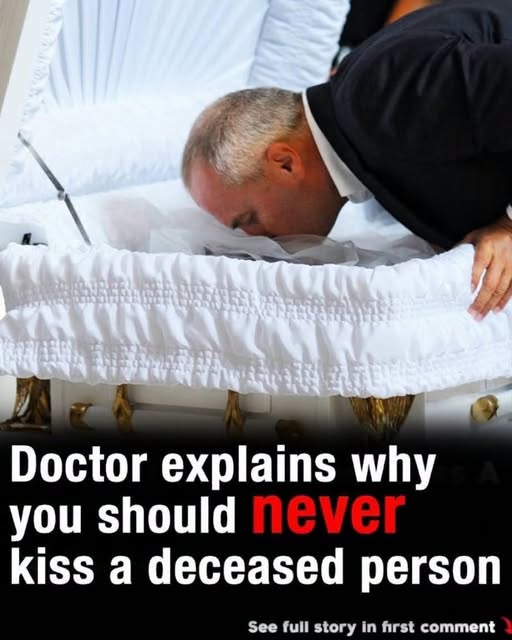
Why do some doctors advise against kissing a deceased loved one? Read more in first comment
Saying goodbye to someone you love is one of the most difficult experiences in life. For many families, kissing a deceased loved one on the forehead or cheek is a deeply personal way of expressing affection, respect, and final farewell. However, some medical professionals advise families to avoid direct physical contact with the body, particularly kissing, and there are important reasons behind this recommendation.
After death, the body begins undergoing natural biological changes. As circulation and normal immune functions stop, microorganisms that were previously controlled by the body’s defenses may multiply. Depending on the circumstances surrounding the death, certain infectious agents may also remain present in bodily fluids or on the skin.
The level of risk varies considerably. Some causes of death involve little additional infection risk, while others, particularly certain infectious diseases, require special precautions. Medical professionals and funeral workers are trained to assess these situations and follow appropriate safety procedures.
Another consideration is the condition of the body. Depending on how much time has passed since death, natural changes may affect the skin, mouth, and other tissues. Contact with bodily fluids can create unnecessary exposure to microorganisms, especially if someone has cuts, sores, or weakened immunity.
However, it is important to understand that kissing every deceased person is not automatically dangerous. In many circumstances, families can safely say goodbye through physical contact when appropriate precautions have been followed. Hospitals and funeral professionals can provide guidance based on the specific circumstances.
For those who are unable or uncomfortable with direct contact, there are many other meaningful ways to express love. Holding a loved one’s hand when permitted, touching their forehead, saying a final prayer, or simply spending a quiet moment beside them can be equally meaningful.
Ultimately, saying goodbye should be a personal and respectful experience. Medical precautions are not meant to take away the opportunity to mourn, but to help families protect their health while honoring someone they will never forget.







Post Comment