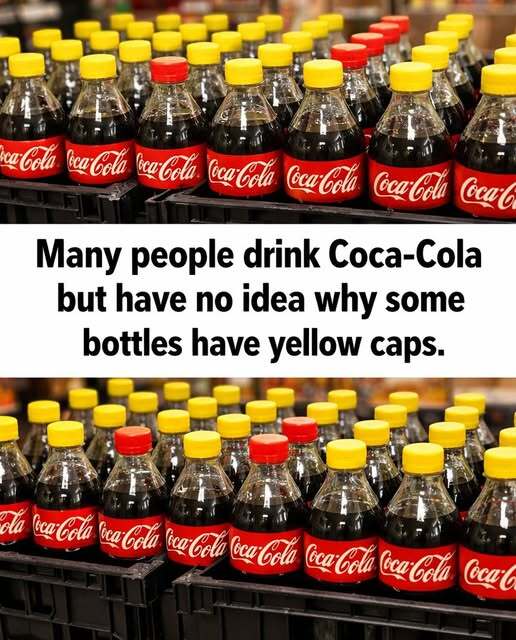
I overheard a woman in the store asking for yellow cap Coca-Colas, saying she would NEVER buy the ones with red caps. What does it mean? She already seemed angry, and I didn’t want to ask her!
**The Mystery Behind the Yellow Cap**
While walking through a grocery store, you might notice something unusual on a bottle of Coca-Cola—a bright yellow cap instead of its familiar red one. At first glance, it may seem like a simple design change or a limited-edition promotion. However, this small detail carries a deeper meaning tied to culture, tradition, and thoughtful adaptation.
For a brand so strongly associated with consistency and global identity, even the smallest variation stands out. Yet the yellow cap is not random—it represents a deliberate effort to accommodate a specific community during an important time of year.
**A Legacy of Consistency and Adaptation**
Since its creation in the late 19th century, Coca-Cola has grown into one of the most recognizable brands in the world. It symbolizes familiarity, shared experiences, and a sense of tradition that transcends borders. Despite this consistency, the company has also demonstrated an ability to adapt in subtle ways to meet the needs of diverse consumers.
The yellow cap is one such example. It reflects how a global brand can remain attentive to cultural and religious practices without altering its core identity.
**The Connection to Passover**
The meaning behind the yellow cap becomes clear when looking at Passover, a significant Jewish holiday lasting about a week. During Passover, those who observe it follow strict dietary laws, avoiding foods known as chametz—products made from certain grains that have fermented.
Additionally, many Jewish communities, particularly those of Ashkenazi descent, also avoid kitniyot, a category that includes corn and its derivatives. This creates a challenge because standard Coca-Cola in the United States is sweetened with high-fructose corn syrup, making it unsuitable for Passover.
**Why the Recipe Changes**
To address this, Coca-Cola produces a special version of its drink specifically for Passover. Instead of high-fructose corn syrup, this version uses cane sugar, which complies with Passover dietary laws. The yellow cap serves as a simple visual indicator that the bottle contains this alternative recipe.
This change is practical but also symbolic. It allows those observing the holiday to continue enjoying a familiar beverage without compromising their traditions.
**A Subtle Gesture of Inclusivity**
What makes the yellow cap notable is not just the ingredient swap, but the intention behind it. Rather than launching a major campaign or drawing excessive attention, Coca-Cola quietly introduces this variation each year. The yellow cap becomes a signal—one that says the brand recognizes and respects the needs of a specific community.
This understated approach resonates strongly. For many, the appearance of yellow-capped bottles marks the arrival of Passover, turning a commercial product into part of a seasonal tradition.
**Does It Taste Different?**
An interesting side effect of the recipe change is a difference in flavor. Many people claim that Coca-Cola made with cane sugar tastes smoother and less syrupy than the version made with high-fructose corn syrup. Some even prefer it, seeking out the yellow-cap bottles regardless of whether they celebrate Passover.
This has given the product a broader appeal, turning what was designed for a specific purpose into something appreciated by a wider audience.
**Accessibility Without Extra Cost**
Another important aspect of this initiative is that the Passover version is typically sold at the same price as the standard one. Despite using a different sweetener, Coca-Cola does not position it as a premium product. This reinforces the idea that the change is about inclusion rather than profit.
By keeping it accessible, the company ensures that those who need it can easily incorporate it into their holiday without added expense.
**Limited but Meaningful Availability**
Yellow-cap Coca-Cola is not available year-round. It appears only in the weeks leading up to Passover and is most commonly found in areas with larger Jewish populations. For those who observe the holiday, spotting it on store shelves becomes a familiar and reassuring sign.
Even for those unaware of its significance, the yellow cap stands as a reminder that products can carry deeper meanings beyond their surface.
**A Small Detail with Big Impact**
In the end, the yellow cap is more than just a packaging change. It represents awareness, respect, and the ability of a global brand to connect with specific traditions in a meaningful way. It shows that even in mass production, there is room for thoughtfulness.
The next time you see a Coca-Cola bottle with a yellow cap, it’s worth recognizing what it stands for—not just a different ingredient, but a gesture of inclusion that turns a simple product into something more culturally significant.






Post Comment