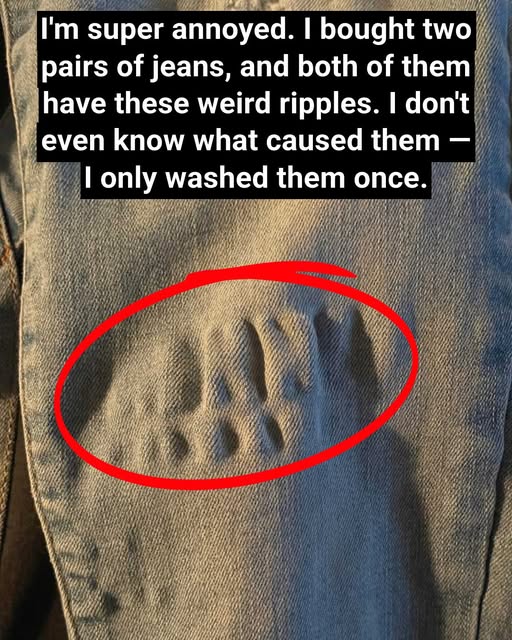
I’m super annoyed. I bought two pairs of jeans, and both of them have these weird ripples. I don’t even know what caused them — I only washed them once…see more below
There’s nothing worse than pulling your favorite jeans out of the wash and noticing they don’t look the same anymore. Instead of that clean, smooth fit you love, you’re left with weird ripples, puckering, or uneven texture. It can feel like your jeans have completely changed shape overnight.
So what’s actually going on—and how can you prevent it?
Most modern jeans aren’t just made from cotton anymore. They often include stretch materials like elastane or Lycra, which make them more comfortable and form-fitting. But while these fibers improve flexibility, they’re also more sensitive to heat and stress.
1. Heat Damages Stretch Fibers
High temperatures—especially in dryers—are one of the biggest causes of rippling. Heat weakens the elastic fibers, causing them to lose their ability to bounce back. When that happens, the cotton and stretch materials stop working together evenly, leading to a wavy or puckered look.
2. Uneven Fabric Tension
Cotton tends to shrink consistently, but stretch fibers don’t. When they break down unevenly, some areas of the jeans tighten while others stay loose. That imbalance creates visible ripples across the fabric.
3. Washing Too Often
Frequent washing wears down both cotton and elastic fibers over time. The more cycles your jeans go through, the more stress they endure—making distortion more likely.
4. Rough Washer Movement
Washing machines twist, spin, and agitate clothing. If your jeans get tangled or compressed—especially in a full load—they can stretch in odd directions and dry that way.
5. Water Absorption
Denim absorbs water unevenly. Some parts get heavier and expand more than others. As they dry, those areas don’t always return to their original shape. Instead, they can settle into slightly stretched or misshapen forms, which show up as ripples or uneven patches across the fabric.
So how do you keep your jeans looking the way they should?
First, turn down the heat. Washing your jeans in cold water and avoiding high dryer settings can make a huge difference. If possible, air-drying is the safest option, as it prevents damage to the delicate stretch fibers altogether. Hanging them or laying them flat helps maintain their natural shape.
Second, don’t overwash. Jeans don’t need to be cleaned after every wear unless they’re visibly dirty. Washing them less frequently reduces stress on the fibers and helps them hold their structure longer. Spot cleaning small stains can also help extend the time between washes.
Third, wash them inside out. This simple step reduces friction on the outer surface and helps preserve both the color and the fabric integrity. It also minimizes the direct impact of agitation during the wash cycle.
Another helpful tip is to avoid overloading your washing machine. Giving your jeans enough space to move freely prevents excessive twisting and pulling, which can distort their shape. A gentler cycle can also reduce wear and tear over time.
Finally, consider reshaping your jeans while they’re still damp. Gently smoothing out wrinkles and tugging them back into form before they dry can help prevent permanent rippling. It’s a small step, but it can make a noticeable difference.
In the end, those strange ripples aren’t random—they’re the result of how different materials react to heat, water, and movement. With a few simple care habits, you can keep your jeans looking smooth, fitting right, and lasting much longer.




Post Comment