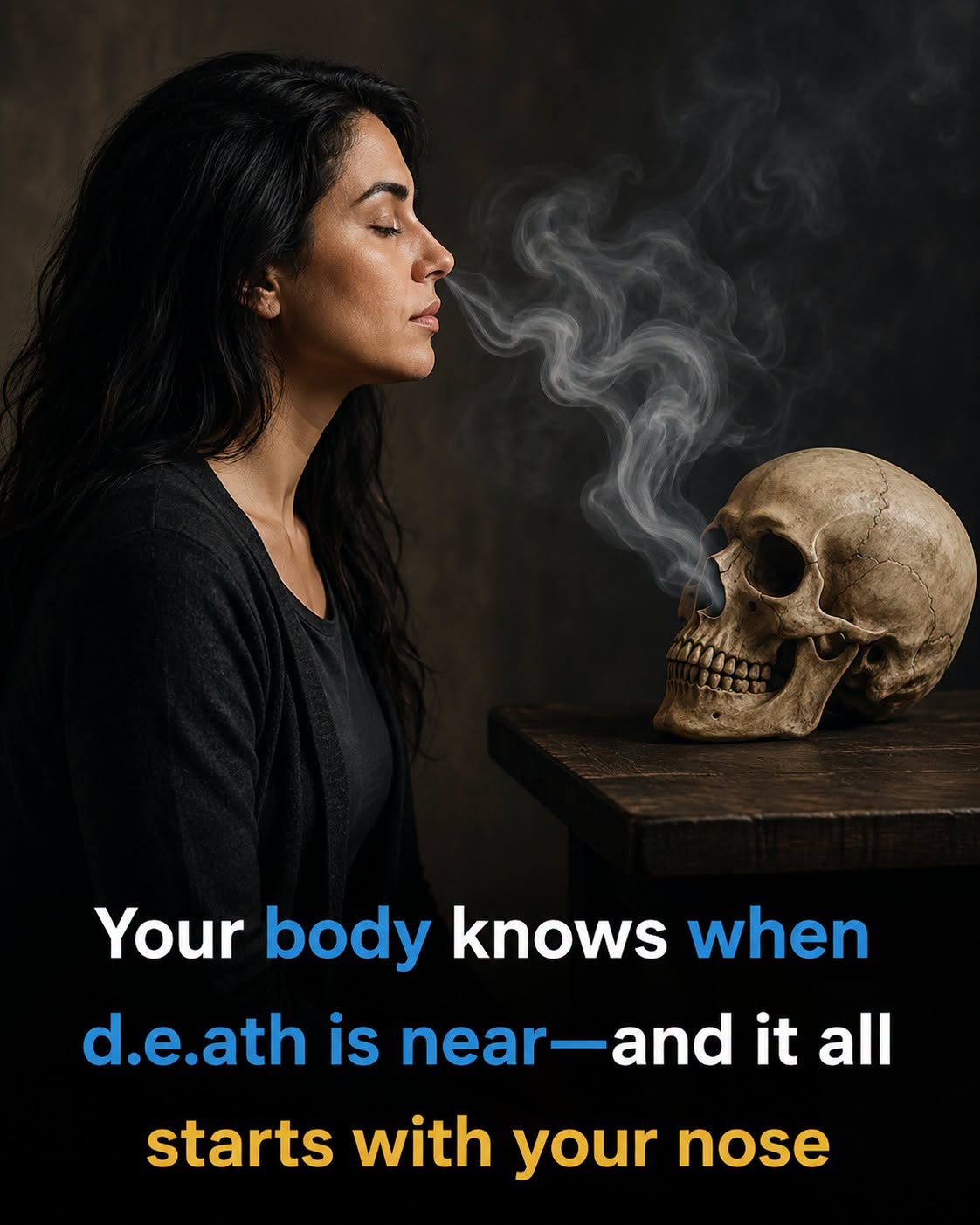
This is actually interesing 💀
Losing someone you love is one of the most difficult experiences a person can face. The death of a family member, close friend, or partner leaves an emotional emptiness that often cannot be filled overnight. Grief affects not only our emotions but also our thoughts, physical health, and even the way we interact with the world. While everyone experiences loss differently, scientists continue to discover fascinating ways in which the human body responds to death—sometimes without us even realizing it.
For generations, many people have believed they could somehow “sense” when death was near. Stories of an uneasy feeling, an unexplained instinct, or an overwhelming sense that something was wrong are common across cultures. While these experiences are often viewed through spiritual or personal beliefs, researchers have also explored whether biology plays a role in how humans respond to death.
One area of scientific research focuses on a chemical compound known as **putrescine**. Despite its unpleasant name, putrescine is a naturally occurring substance produced during the breakdown of living tissue after death. It releases a distinctive odor that humans may not consciously recognize, yet studies suggest our brains can still respond to it on a subconscious level.
Scientists believe putrescine functions as a type of biological warning signal. Unlike pheromones, which often influence social or reproductive behavior, putrescine appears to activate ancient survival instincts. Rather than attracting others, it encourages avoidance by signaling that something in the environment may be dangerous.
In a well-known study conducted by researchers Wisman and Shira, participants were unknowingly exposed to the scent of putrescine. Interestingly, they did not identify the smell as being related to death or decay. However, their behavior changed. Many instinctively moved away from the source of the odor or became more alert, suggesting that their brains had processed the chemical as a potential threat even without conscious awareness.
This type of response is not unique to humans. Throughout the animal kingdom, many species rely on chemical signals to detect predators, disease, or decaying organisms. These instinctive reactions help animals avoid danger and increase their chances of survival. Researchers believe humans may have retained similar biological responses through evolution, even if modern life rarely requires us to depend on them.
Scientists have also found evidence that emotional states can be communicated through scent. Research suggests that human sweat produced during moments of intense fear contains chemical compounds that can subtly affect others nearby. Although people may not consciously detect these odors, they may become more alert, anxious, or cautious after exposure. These findings highlight how deeply connected our senses are to emotion and survival.
Despite these fascinating discoveries, researchers emphasize that smelling putrescine or experiencing a sense of unease should not be interpreted as proof that someone has died or that death is imminent. Human emotions, memories, stress, and expectations can all influence how we interpret unusual feelings. Scientific studies instead suggest that our brains are capable of responding to certain biological cues without our conscious awareness.
Grief itself is also more than an emotional experience. It can affect sleep, appetite, concentration, and physical health. Many grieving individuals report fatigue, anxiety, sadness, and difficulty focusing during the weeks and months following a loss. These reactions are considered normal and often improve over time, although some people may benefit from professional support if grief becomes overwhelming or persistent.
Ultimately, the science surrounding death reminds us that humans are deeply connected to both biology and emotion. Our bodies constantly process information from the environment, often in ways we never consciously notice. While grief remains one of life’s most personal experiences, it is also a universal part of being human—shaped by our emotions, our memories, and even ancient survival mechanisms that continue to influence us today.
Although science can explain some of the body’s hidden responses to death, it cannot fully capture the depth of love or the pain of losing someone important. What it does reveal is that our minds and bodies are remarkably interconnected, reflecting both the emotional and biological nature of the human experience.






Post Comment