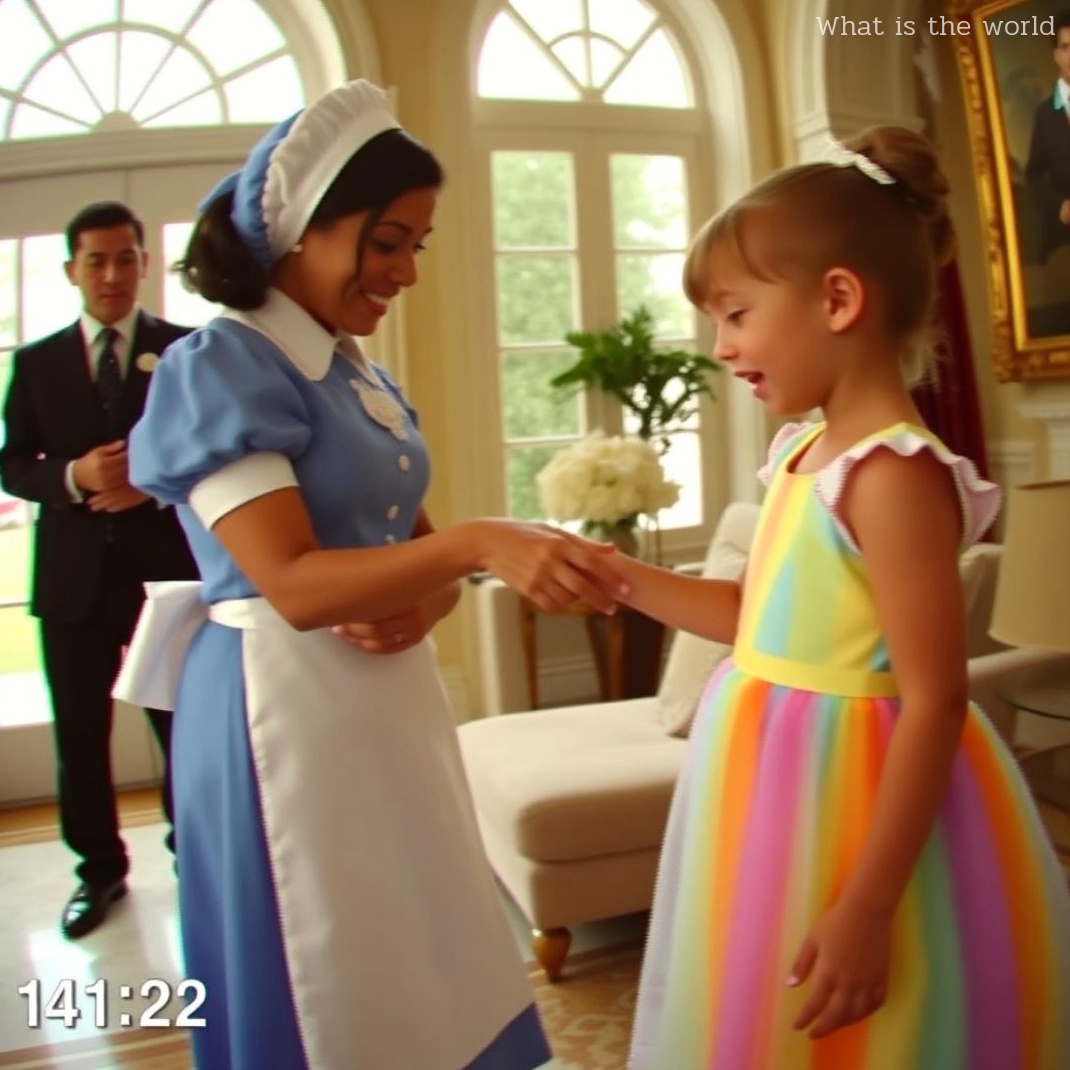
From my very first day at the Hawthorne estate, the rule was made clear: “Stay away from the CEO’s daughter. She doesn’t connect with anyone.” – Story
She was six, autistic, and always by herself. I promised myself I’d follow the rule, but three weeks later, she was the one who shattered the silence.
She looked up at me and whispered, “Dance with me.” That was when I realized I had done something I wasn’t supposed to—I had reached her.
The rule was clear from the start: *“Leave the CEO’s daughter alone. She doesn’t connect with people.”*
The Hawthorne estate was vast and quiet, the kind of silence wealth breeds—plush carpets, dim lighting, hushed voices. I had been hired as a live-in tutor, paid generously to maintain routines, but forbidden from interacting beyond structure.
Sophie Hawthorne sat each morning in the sunroom corner, arranging wooden blocks by color and size. She never looked up, never responded. Staff treated her like fragile glass. Her father, Michael Hawthorne, rarely appeared, and when he did, he watched silently, weighed down by unspoken guilt.
I tried to follow the rule. Days passed in careful avoidance. Yet even in silence, I noticed her reactions—flinches at loud voices, fingers over ears, soft hums to soothe herself.
Then, one afternoon, a slow instrumental melody drifted from the staff radio. Sophie stood. She approached me, measured steps, eyes unwavering.
“Dance with me,” she whispered.
I froze, aware of the boundaries, the protocols. “Only if you want to,” I said.
She nodded. I swayed gently; she mirrored me, not perfectly, but with intention. The humming stopped. Her breathing steadied. When the music ended, she returned to her blocks as if nothing had changed. But everything had.
That evening, Michael appeared. “She spoke,” he said, astonished. I explained—no pressure, no techniques—just presence. Weeks later, Sophie began letting me in gradually: handing blocks, sitting closer, dancing again. Always on her terms.
Her therapists noticed her regulation and intentionality. Michael learned too, sitting beside her without demanding eye contact, learning connection can exist without words.
Then the pressure of the Hawthorne empire intervened. Six months later, Michael’s absence from the boardroom and time with Sophie drew scrutiny. His sister Elena demanded Sophie appear at the Foundation Gala, “ready for the public eye,” insisting the child perform as proof of Michael’s competence.
“She can’t do it their way,” I said firmly.
“No, we change the game,” I told him.
At the gala, instead of parading Sophie, Michael presented a live feed of her in the sunroom, arranging blocks calmly. “Sophie isn’t a broken machine,” he told the stunned room. “She is a girl who experiences the world intensely. She is the legacy.”
The board relented. Authenticity had won.
My two years at the estate were up. Staying would risk Sophie’s dependency. On my final day, the sunroom bathed in golden light, she turned on the radio—the same melody as years before. She didn’t cry. She didn’t plead. She simply took my hand, leading me to the center of the room. We danced one last time.
As the music faded, she whispered, “Go. Happy.”
Five years later, I received a letter—not words, but intricate drawings of dust motes, blocks, and dancing shoes. At the bottom, in careful, deliberate handwriting:
*“The world is loud. We are quiet. Quiet is okay.”*
I realized then that I hadn’t just reached her. She had reached out and rewritten the world for all of us.






Post Comment