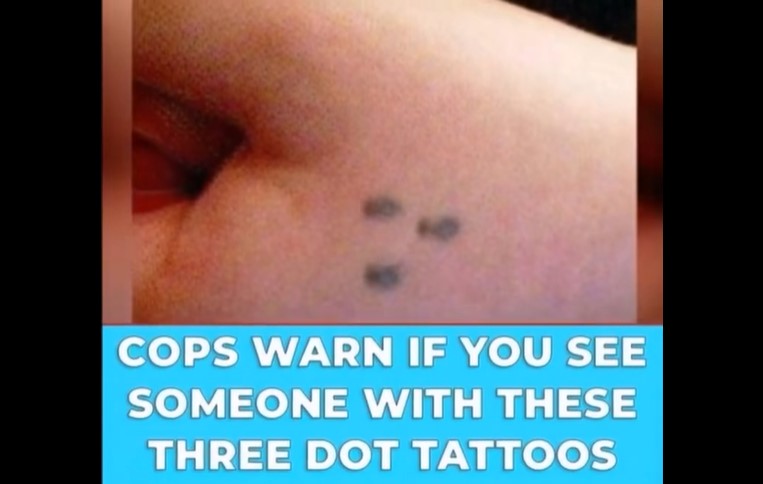
Avoid them if you see that tattoo… – v
Tattoos represent one of humanity’s oldest and most universal forms of self-expression. Evidence of tattooing stretches back more than 5,000 years — from Ötzi the Iceman’s therapeutic/symbolic markings to sophisticated traditions found on almost every inhabited continent.
In **ancient Egypt**, tattoos were especially common among women and were strongly connected with fertility, protection, and social status. **Polynesian societies** developed perhaps the most visually complex and socially structured tattoo systems in the world. Every line, curve, and pattern carried precise meaning — recording lineage, rank, achievements, courage, and spiritual connections. Receiving a full traditional Polynesian tattoo (tatau) was an extremely painful, days-long rite of passage that demonstrated both physical endurance and worthiness within the community.
Indigenous peoples across the **Americas** also practiced tattooing extensively. Among many groups — including Inuit, Haida, Maya and numerous Native American nations — tattoos marked important life transitions, ceremonial achievements, healing/protection, social roles, and deep spiritual relationships with nature and ancestors.
Throughout most of history, tattoos were **rarely purely decorative**. They almost always functioned as visible social, religious, political or personal documents. A tattoo could show:
– warrior rank
– tribal/clan affiliation
– completed rites of passage
– spiritual protection
– survival of hardship
– marriageability
– religious devotion
In more recent centuries, distinctive tattoo languages also developed in **subcultural contexts** — especially in prisons, among gangs, sailors, and various marginalized groups. Symbols such as teardrops, spiderwebs, five dots, three dots in triangle (“mi vida loca”), clocks without hands, and many numbers carry very specific meanings understood primarily by people within those worlds.
**Modern tattoo culture** shows fascinating evolution. Traditional symbols once deeply tied to specific cultural, spiritual or subcultural contexts are now frequently reinterpreted, borrowed, mixed, or chosen simply because people find them visually beautiful. At the same time many people still get tattoos for profoundly personal reasons:
– memorializing loved ones
– marking major life transformations
– celebrating survival
– honoring cultural heritage
– expressing identity
– processing trauma
– making permanent statements about values and beliefs
Today tattoos exist in an enormous range of styles — from delicate minimalist lines, through neo-traditional, Japanese-inspired large-scale work, realistic portraits, abstract watercolor, to complete body-suits.
Despite all changes in style, technique, and social acceptance, the most essential thing remains the same:
**Tattoos are still deeply human stories written in skin.**
They are permanent choices about who we are, what we have survived, who and what we want to remember, and how we want to be seen in the world — making them one of the most intimate, enduring, and powerful forms of personal and cultural expression humanity has ever created.





Post Comment