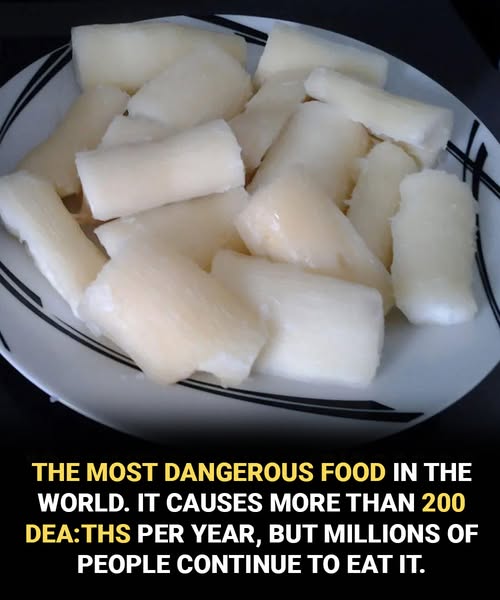
Me too😲. Despite Being the ‘World’s Deadliest Food,’ 500 Million Still Consume It, and It Claims Over 200 Lives Annually
Many everyday foods we enjoy without a second thought harbor natural toxins that can become harmful—or even life-threatening—when mishandled. Cassava, a staple root vegetable across South America, Africa, and parts of Asia, contains cyanogenic glycosides that release cyanide when the plant is damaged or improperly processed. Raw or undercooked cassava can cause severe poisoning, with symptoms ranging from headache and dizziness to convulsions and, in extreme cases, death. Traditional preparation methods—peeling, soaking in water for days, fermenting, or boiling thoroughly—are essential to break down these compounds and render the root safe. In regions where cassava is a dietary cornerstone, improper handling has led to outbreaks of acute cyanide poisoning, underscoring how cultural knowledge safeguards what could otherwise be a risky food.
Certain fruits and vegetables pose dangers that are far less obvious. Starfruit (carambola) appears innocent and refreshing, yet it contains oxalates and neurotoxins that healthy kidneys usually filter out. For people with chronic kidney disease or impaired renal function, even a single small serving can trigger oxalate nephropathy, leading to confusion, seizures, coma, or fatal outcomes. Similarly, green or sprouted potatoes exposed to light develop solanine and chaconine—glycoalkaloids that cause gastrointestinal distress, neurological symptoms, and, in rare severe cases, cardiac issues. Rhubarb leaves, often discarded, contain high levels of oxalic acid, while unripe elderberries and raw kidney beans harbor lectins and cyanogenic compounds that require thorough cooking to neutralize. These examples highlight how appearance and familiarity can mask real hazards.
Seeds and pits from common fruits and nuts also conceal toxic potential. Apple seeds, cherry pits, apricot kernels, and bitter almonds contain amygdalin, which breaks down into hydrogen cyanide in the digestive system. Swallowing a few accidentally is typically harmless due to low quantities and the body’s natural detoxification, but deliberately consuming large amounts—such as grinding bitter almonds or eating apricot kernels as a supposed health supplement—can lead to cyanide poisoning with symptoms like rapid breathing, low blood pressure, and loss of consciousness. Raw cashews, before processing, carry urushiol (the same oil in poison ivy), causing severe skin reactions or internal irritation if not steamed or roasted properly. Mango skin contains similar compounds, explaining why some people experience rashes after handling or eating unpeeled fruit.
Perhaps the most infamous example is pufferfish (fugu), a prized Japanese delicacy containing tetrodotoxin—a neurotoxin up to 1,200 times more lethal than cyanide. The toxin resides in the liver, ovaries, skin, and eyes; only chefs with years of specialized training and government licensing are permitted to prepare it, removing the dangerous parts with surgical precision. Even minor errors have caused fatalities. Nutmeg, a familiar spice, becomes hazardous in excess: consuming 10–20 grams can induce myristicin-induced hallucinations, nausea, rapid heartbeat, and seizures due to its psychoactive properties. These cases remind us that proper sourcing, preparation, and moderation transform potentially deadly substances into safe, enjoyable foods. Awareness of these hidden risks—combined with respectful handling—allows us to savor nature’s bounty without courting danger.






Post Comment