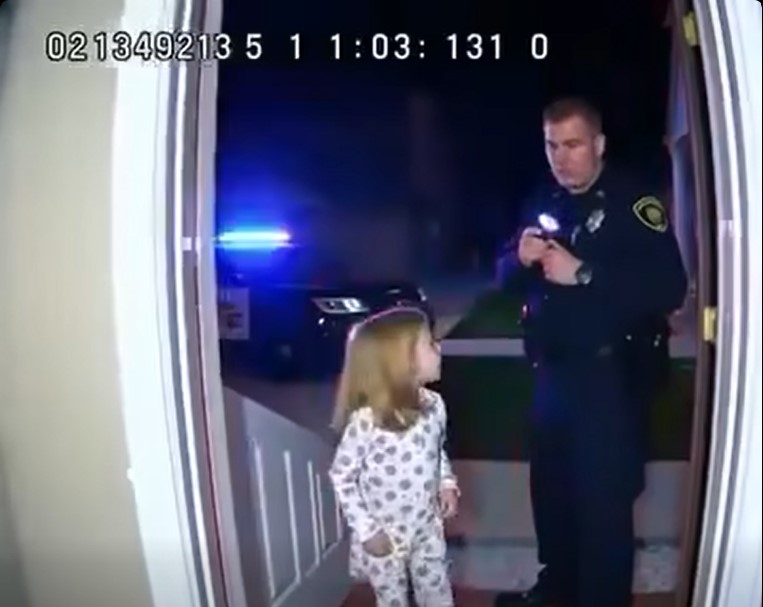
In the middle of the night, a seven-year-old girl dialed 911 and whispered that her parents wouldn’t wake up. – StoryV
The suburban street lay hushed under the glow of streetlights, their soft circles pooling on empty sidewalks. Houses stood dark and still, wrapped in the ordinary quiet of midnight. Then came the distant wail of sirens—faint at first, growing insistent, slicing through the calm like a signal that peace had shattered.
Inside a modest home at the block’s end, two officers paused at the threshold. Experience had honed their instincts: this call carried weight. The 911 dispatcher had relayed the essentials in clipped tones—a child’s voice, small and steady despite the tremor: “My mommy and daddy won’t wake up. They’re sleeping… but something’s wrong.”
The caller was seven-year-old Lily. No panic in her words, only quiet certainty. That composure alone told the dispatcher this was urgent.
The officers stepped inside. The silence hit them first—not the gentle hush of sleep, but something thicker, heavier, as if the house held its breath. Flashlights swept the living room: folded blankets on the couch, family photos on the walls, a small backpack by the door. Ordinary scenes made eerie by the stillness.
They moved down the hallway, boots soft on the floor. At the bedroom doorway, their beams found the bed. A man and woman lay side by side, hands loosely clasped. Faces calm, almost serene. Too still.
“Sir? Ma’am?” one officer called quietly.
No answer.
The second officer checked for pulses, breaths—routine motions performed with practiced care. He looked up, met his partner’s gaze, and shook his head once. The truth settled between them without words: the parents were gone.
The silence deepened. Distant sirens faded; the house’s quiet amplified every breath, every creak. But the officers remembered the child.
In the living room, Lily stood near the couch, clutching a worn stuffed bear to her chest. Its fur was matted from years of hugs. Her eyes—wide, searching—flicked between the officers and the shadowed hallway. No tears yet. Just watchful waiting.
One officer knelt to her height, voice gentle. “Hi, Lily. I’m Officer Ramirez. You did the right thing calling us. You were really brave.”
She nodded, small hands tightening on the bear. A faint tremble betrayed the fear she held inside.
They guided her to sit, switched on a lamp. Warm light pushed back the shadows. While waiting for paramedics and support, they stayed close—talking softly about safe things: her favorite color (purple), her best subject (art), the bear’s name (Mr. Whiskers). Small anchors in a night tilting toward chaos.
Lily spoke haltingly. Bedtime had been normal: Mom read a story, Dad kissed her forehead and said, “Love you always.” She’d drifted off feeling safe. Then a bad dream woke her. She padded to her parents’ room, expecting comfort.
They didn’t stir.
She called their names. Climbed onto the bed. Shook them gently. Waited.
When nothing changed, fear crept in. But something deeper—instinct, perhaps—sent her to the phone. She dialed 911 and asked for help.
Paramedics arrived and confirmed the officers’ assessment. The parents had passed peacefully in their sleep. No forced entry, no struggle, no threat to Lily. The home remained untouched, frozen in its last ordinary evening. Investigators would determine the cause—perhaps a sudden medical event, perhaps something quieter—but for now, the focus was Lily.
A social worker named Amanda arrived, calm and steady. She wrapped Lily in a blanket. “You’re safe,” she said. “You’re not alone. We’re going to take care of you.”
Lily looked up, voice small. “When will Mommy and Daddy wake up?”
No simple reply existed. Only compassion.
As dawn paled the windows, relatives were contacted. Arrangements formed to place Lily with loving family. The street outside filled quietly—neighbors in robes and coats, whispering, watching emergency lights flash.
In the days ahead, the community wrapped around her. Flowers piled on the porch. Cards arrived with messages of love. At school, teachers carved out space for grief; classmates drew pictures, wrote notes: “We’re glad you’re here.”
Lily began healing—slowly, with counselors, family, and quiet routines. She returned to school, picked up drawing again: stars, open skies, soft light. When she spoke of her parents, it was gentle: “They live in the stars now. They watch me.”
Therapists called her resilient, empathetic—a child shaped by sorrow but not broken. She learned to name her feelings, seek comfort, understand bravery: not fearlessness, but acting through fear.
The officers never forgot her. Each year on her birthday, a card arrives—simple, signed: “From your friends who came when you called.”
Lily’s night of sirens and loss became something more: proof of a child’s courage, a community’s kindness, the enduring power of connection. In the darkest quiet, when the world felt unbearable, a small voice reached out—and help answered.
Even in unimaginable grief, love and human care can hold firm. And sometimes, the truest hero is a seven-year-old who knows to ask for help.






Post Comment