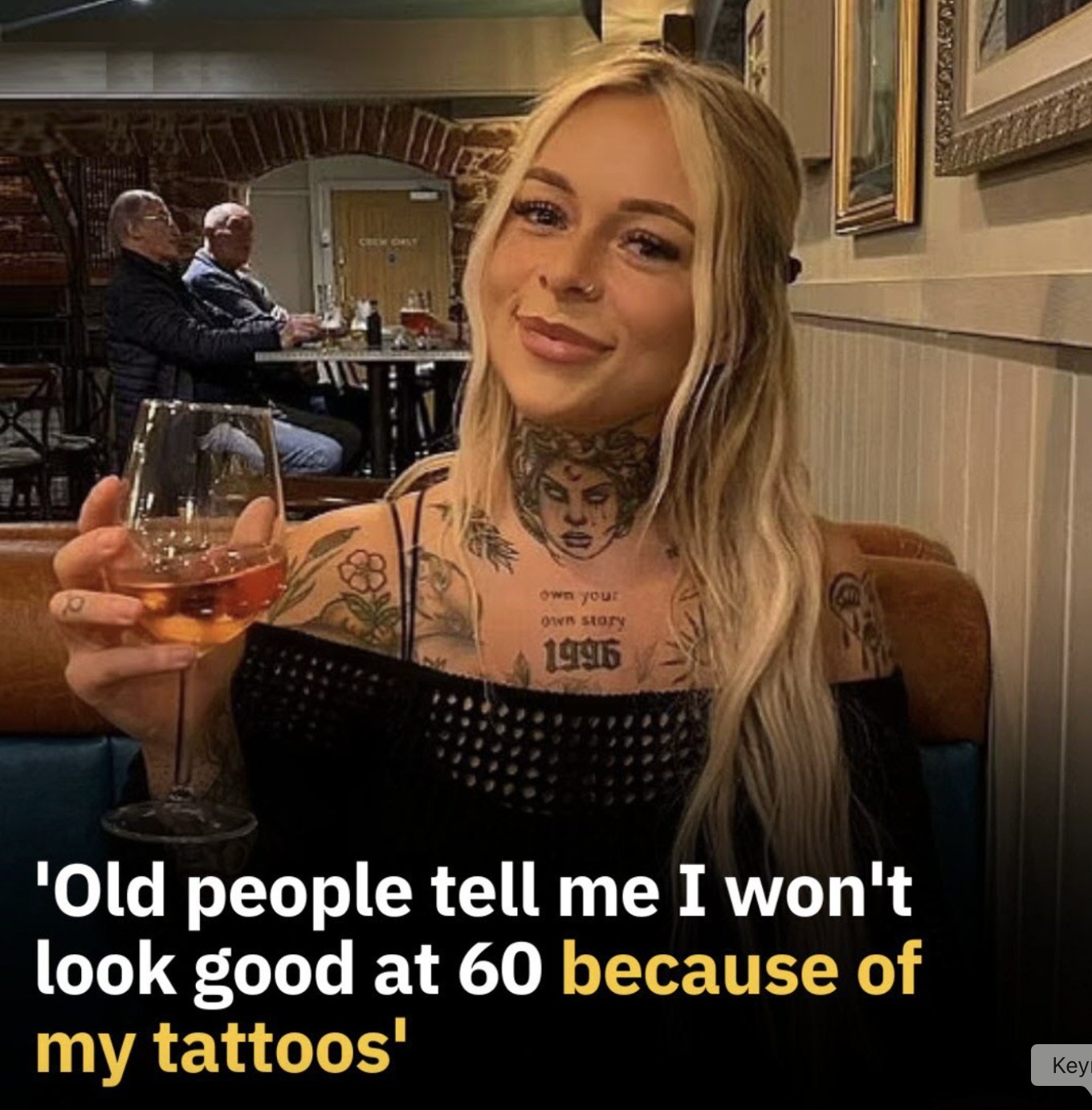
“Why can’t they just keep their thoughts to themselves?” 😮 Read her story.
**Tattooed and Unapologetic: Taylor Paige Courtenay’s Defiant Response to Critics**
Taylor Paige Courtenay, a 27-year-old from South Devon, England, has ignited online debate by boldly addressing criticism from older generations who warn she’ll regret her extensive tattoos as she ages.
With ink covering her neck, face, arms, torso, stomach, and legs—including striking designs like a Medusa on her neck, a tiger and leopard on her torso, and colorful nature scenes—Courtenay views her body as a living canvas of personal stories, emotions, and milestones. For her, tattoos are far more than decoration; they’re a powerful form of self-expression and authenticity.
Despite her confidence, she openly shares the challenges of defying traditional beauty standards, especially those upheld by older people. These norms often judge her femininity, worth, and future prospects based on appearance. In viral TikTok videos, she has admitted accepting she may not fit the mold of “that girl”—the one proudly introduced to families or celebrated publicly. Instead, she might be seen as temporary or hidden. Yet this realization no longer wounds her; it strengthens her resolve to prioritize her own happiness over external approval.
The most persistent critique? That her tattoos will look terrible at 60. Framing such comments as concern, critics often predict regret. Courtenay pushes back firmly. In one popular clip captioned “Your tattoos are not going to look good when you hit 60,” she responds defiantly: aging happens to everyone, bodies change regardless of ink, and fear of future wrinkles or sagging shouldn’t dictate present choices. She wishes detractors would keep opinions to themselves.
Her posts draw mixed reactions. Supporters praise her honesty, sharing their own long-term love for tattoos with no regrets—even after decades. They champion bodily autonomy, arguing personal expression doesn’t need universal approval. Critics, however, claim she’s “ruined” her natural beauty, likening tattoos to “graffiti,” or insist sharing online invites judgment. Some urge modesty to avoid scrutiny.
This reflects a generational divide: tattoos, once rebellious, are now mainstream for many young people as art, resilience, and identity. Older voices may offer well-intentioned “wisdom,” but younger ones often see it as intrusive control.
Courtenay protects her peace by occasionally disabling comments. Her life also challenges assumptions—she’s a mother (welcoming her child in summer 2023) and cherished partner, proving meaningful relationships value connection over conformity.
Her story isn’t about urging everyone to get tattoos, but defending the right to choose without shame. Aging is inevitable, yet it shouldn’t threaten self-expression. By embracing her inked skin, Courtenay sparks vital talk on autonomy, acceptance, and living authentically now—ink and all.





Post Comment