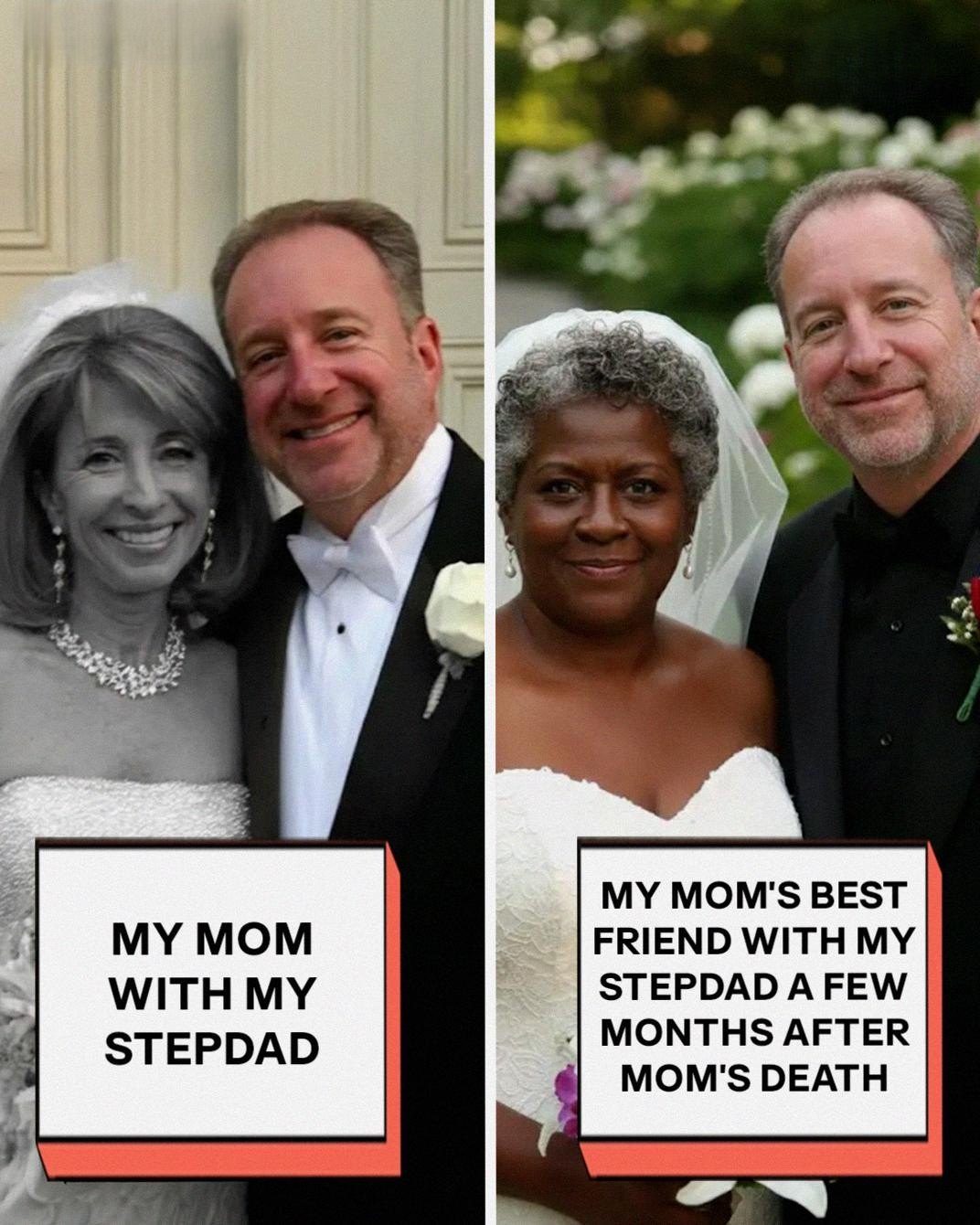
My mom died from cancer. I watched her shrink. Some days she joked. Other days she just stared at the wall and apologized for “being difficult.” – Story
**Betrayal in the Shadow of Grief**
My mom’s battle with cancer lasted eight agonizing months. It eroded her slowly—stealing her energy, her hair, her ability to mask the pain. Some days she’d laugh over old stories; others, she’d gaze out the window, already drifting away. Near the end, she apologized endlessly for being tired, for needing help, for simply existing in a body that was failing. I’d squeeze her hand and beg her to stop, but guilt clung to her like the faint rosemary oil scent that always lingered.
Paul, my stepdad, was there throughout—bringing groceries, staying late, holding space. So was Linda, Mom’s best friend since college. They formed a quiet team around us, and I clung to that illusion of support. I didn’t yet see how isolated Mom truly felt.
She passed away quietly. The funeral came and went in a blur of condolences and casseroles. The house still carried her: reading glasses on the coffee table, crocheted blanket draped over her armchair, slippers by the bed, her favorite mug untouched on the shelf. I couldn’t bear to move anything.
Barely a month later—twenty-eight days, to be exact—Paul showed up at my apartment. Standing awkwardly in my tiny kitchen, he said the words that cracked something inside me: “Linda and I have decided to get married.”
I stared, numb. Linda. The woman who’d held Mom’s hand during chemo, who’d whispered encouragement through sleepless nights. I told him to leave. He did, without argument.
Thirty-two days after Mom’s death, they were married. Social media filled with photos: soft lighting, smiling faces, captions about “new beginnings” and “healing.” Linda wore peonies in her bouquet—Mom’s favorite flower. The sight twisted like a knife.
That’s when I remembered the necklace. Heavy gold chain with tiny diamonds, a diamond clasp. Mom wore it in every holiday photo, every family gathering. She’d promised it to me years ago, pressing my hand and saying, “It’s yours when I’m gone—something to remember me by.”
I messaged Paul: “Where’s Mom’s necklace?”
Silence stretched for hours. Then a single reply: “Linda has it now. She always admired it.”
The betrayal landed harder than the wedding announcement. It wasn’t just speed or choice—it was erasure. They’d taken her place, her flowers, her jewelry, as if grief had an expiration date and memories were negotiable.
I didn’t confront them dramatically. No public scene, no explosive fight. Instead, I quietly gathered Mom’s things—the glasses, the blanket, the mug, the slippers. I boxed what I could carry and left the rest. I stopped answering calls, muted their posts, built distance like armor.
Grief doesn’t follow timelines. It doesn’t care about “moving on.” Mom deserved more than a rushed replacement. She deserved her memory honored, not overwritten.
I keep the necklace in my mind—the way it caught light on her collarbone. It’s gone, but she isn’t. Her love, her laugh, her quiet strength—they live in me, untouched by anyone else’s new chapter.
Some losses scar deeper when the people left behind choose convenience over loyalty. I learned that the hard way. But I also learned to protect what remains: her essence, my memories, my right to mourn without apology.
Mom, I’m still here. And I remember.




Post Comment