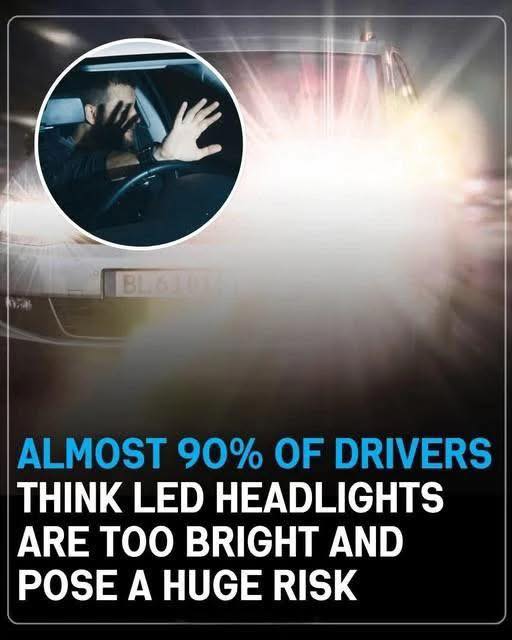
Nearly 90% of drivers think LED headlights are too bright and could be a safety risk. This concern sparks ongoing discussions about road safety and visibility. 💡🚗
LED headlights have become a standard feature in modern vehicles, praised for their energy efficiency, long lifespan, and stylish design. Yet, as their use has grown, so too have concerns about their impact on road safety. While these lights enhance visibility for the driver using them, many oncoming motorists report temporary blindness or distraction due to their intense brightness. A recent national survey found that nearly 90% of drivers feel LED headlights are too bright, underscoring a widespread concern about glare on the roads.
The issue largely stems from how LED lights function. Unlike traditional halogen bulbs, which scatter light more diffusely, LEDs produce a highly focused beam. This design improves clarity for the driver but can cause discomfort or momentary disorientation for others, especially if the headlights are misaligned or installed through aftermarket kits. The problem is more pronounced when taller vehicles, such as SUVs and trucks, direct their beams toward smaller cars or motorcycles, creating a height mismatch that exacerbates glare.
Not all LED headlights are inherently dangerous. Factory-installed and properly aligned LEDs generally comply with regulatory standards and minimize glare issues. Many complaints arise from aftermarket modifications or improperly aimed lights rather than the technology itself. Nevertheless, the growing number of reports has prompted calls for stricter oversight. Safety advocates suggest measures such as brightness limits, alignment standards, and mandatory checks during vehicle inspections. Some countries are experimenting with adaptive lighting systems that adjust beam direction and intensity automatically, balancing driver visibility with safety for others.
In the meantime, drivers can take steps to mitigate risks. Choosing headlights that meet safety standards, ensuring proper installation, and aligning lights correctly are essential. Those affected by oncoming glare can also use defensive strategies, such as glancing slightly to the right of the road or using a day-night mirror setting.
Ultimately, LED headlights highlight the need for responsible use and regulation. Technology alone does not guarantee safer roads; careful implementation, proper alignment, and awareness of others are key. The objective is clear: better visibility should enhance safety for everyone, not just the driver behind the brightest lights.






Post Comment