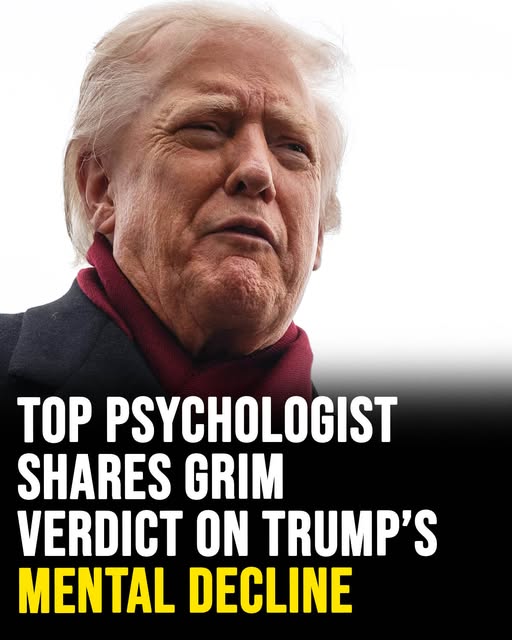
This is scary. Top Psychologist Issues Stark Warning After Donald Trumps Rapid Mental Decline After MRI Visit…
Dr. John Gartner argues that Donald Trump’s recent behavior isn’t a series of random missteps but part of a discernible pattern—what he sees as the collision of longstanding narcissistic traits with potential cognitive decline. Gartner describes a trajectory in which impulsiveness, aggression, paranoia, and grandiosity intensify as memory lapses, confusion, and executive dysfunction emerge. Verbal stumbles, rambling monologues, moments of disorientation, and physical hesitations, he notes, aren’t typical gaffes—they suggest strain in the internal controls that once kept these impulses in check.
For those familiar with dementia in private life, the pattern is unsettlingly familiar, though magnified by its public stage. Repeated name mix-ups, confusion over timelines, abrupt mood shifts, and disproportionate anger create a feedback loop: cognitive decline amplifies personality extremes, while personality rigidity worsens instability. Gartner emphasizes that he cannot diagnose from afar, but he sees enough signs to caution that the trajectory warrants serious attention.
The stakes, he warns, are not only personal. A movement built on absolute loyalty now orbits a figure whose decisions may become increasingly unpredictable. History shows that when cognitive decline intersects with authoritarian tendencies, instability can accelerate. Traits that once masked insecurity—bluster, deflection, grievance—may harden as clarity slips, making judgment more erratic and reactive.
Gartner highlights how political pressures and public scrutiny leave no room to hide deterioration. Microphones, cameras, and crowds capture every stumble, while supporters and aides may try to shield him. The emotional consequences—fear, suspicion, denial—intertwine with personality traits, creating a combustible mix. Observers have noted backstage confusion, missed briefings, and visible frustration, which, though often minimized, compound the risk when amplified by public influence.
Ultimately, Gartner stresses vigilance, clarity, and transparency. The concern isn’t partisan but systemic: decline in someone with enormous authority carries ripple effects that touch national decision-making. While debates will continue over cause and degree, the broader lesson is clear—patterns of behavior that feel familiar should never be dismissed as harmless, especially when the consequences extend far beyond one individual.






Post Comment