A Mysterious Swelling Behind the Ear: What Could It Be?
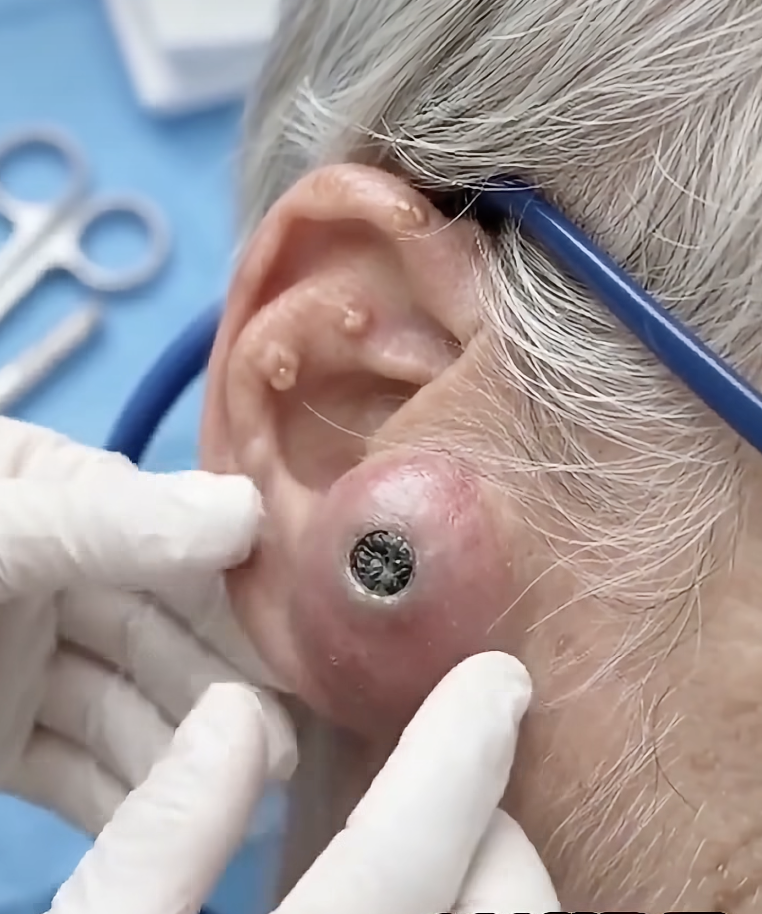
A small lump behind the ear might seem harmless at first, but when it becomes swollen, red, and painful, it can raise serious concerns. A close-up video showing a large, inflamed bump behind an older woman’s ear highlights why unusual skin changes deserve medical attention.
In the footage, a healthcare professional wearing gloves gently examines a noticeably swollen area near the earlobe. At the center of the swelling is a dark, circular spot, surrounded by irritated, reddish-purple skin. Although its appearance is striking, the exact cause cannot be determined from the video alone.
One possible explanation is an inflamed epidermoid cyst, a common condition that occurs when keratin accumulates beneath the skin. These cysts usually grow slowly and are often painless. However, when irritated, ruptured, or infected, they can become significantly swollen and tender.
Other possibilities include a localized skin infection, an abscess, or another type of skin lesion. The dark central area is particularly important because it could represent a plugged opening, crusted material, or damaged tissue. A medical examination is necessary to distinguish between these conditions.
Doctors typically evaluate such swellings by examining their size, texture, tenderness, and surrounding skin. Depending on the diagnosis, treatment may involve observation, medication, drainage, or surgical removal.
One important precaution is to avoid squeezing or puncturing an unexplained lump at home. Doing so can worsen inflammation, introduce bacteria, and potentially cause further complications.
The video serves as a reminder that even seemingly minor skin abnormalities can develop into noticeable medical concerns. Persistent growth, increasing redness, pain, drainage, or changes in skin color should prompt professional evaluation.
The key takeaway: Not every lump is dangerous, but an unusual swelling with visible inflammation should never be ignored. Early medical assessment can help identify the underlying cause and determine the safest treatment.






Post Comment