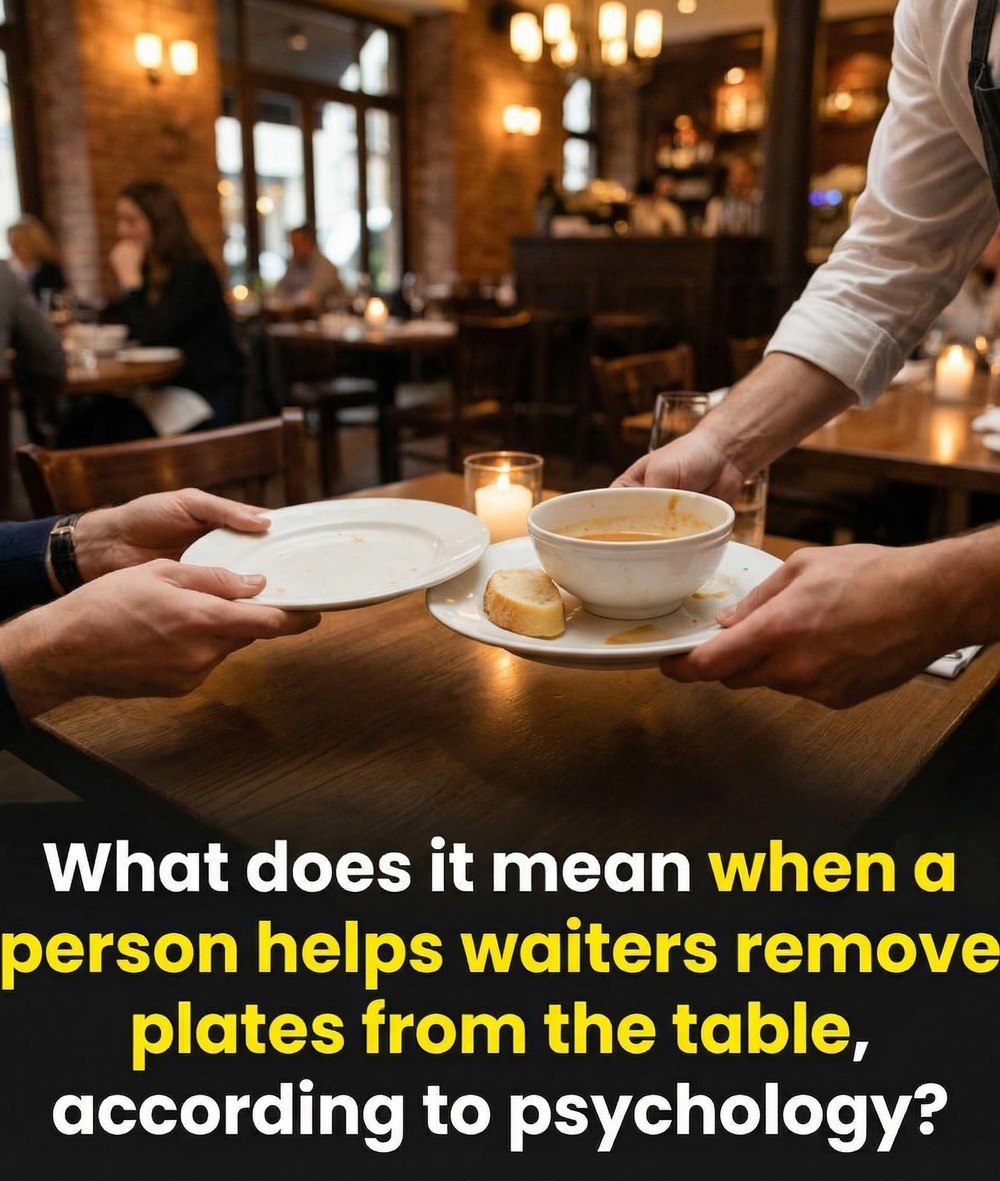
What psychology reveals when someone helps the waiter clear the table
In everyday social situations, small behaviors often reveal more about a person’s character than we might realize, and dining etiquette is no exception. When someone voluntarily helps a waiter remove plates from the table, it can be an indicator of several positive psychological traits. This gesture typically reflects courtesy, cooperation, and social awareness, qualities that help create smoother interactions between individuals. In many cultures, diners are encouraged to simply enjoy their meal while staff handle the rest; however, some people naturally feel inclined to assist when they see an opportunity. Their actions are not meant to be intrusive but rather supportive, showing a desire to make shared spaces more comfortable for everyone.
Psychology also associates this type of behavior with empathy and respect for service roles. Individuals who choose to help often understand the effort that waitstaff put into ensuring a pleasant dining experience. They may recognize that removing a few plates can save the waiter time and make their job slightly easier during a busy shift. This understanding can come from personal experience—perhaps the person has worked in customer service before—or simply from a strong sense of compassion. Helping in small ways becomes a natural extension of their gratitude. Instead of viewing the interaction as strictly transactional, they treat staff members as people deserving of kindness and acknowledgment.
Additionally, assisting a waiter may reflect a person’s sense of responsibility and emotional intelligence. People who are highly aware of their surroundings often notice when a staff member is handling multiple tasks at once. They may instinctively step in to help, not because they feel obligated, but because they prefer to contribute to a positive environment. This behavior also suggests a level of confidence and comfort in social settings. Rather than passively waiting, they take initiative in a respectful, non-disruptive way. Psychologists note that prosocial behaviors like these often arise from internal motivation to be helpful rather than from a desire to receive attention or praise.
Finally, it is important to understand that helping a waiter does not necessarily mean the person is trying to signal anything specific about themselves. People differ in their habits, cultural backgrounds, and upbringing, and this small action can simply be a reflection of personal values. What matters most is the intention behind the gesture. In general, this behavior tends to be associated with kindness, thoughtfulness, and positive social interaction. Whether someone is trying to be helpful, express appreciation, or simply speed up the process so they can continue their conversation, such actions contribute to a more pleasant dining experience for everyone. By recognizing these small moments of cooperation, we gain insight into how simple acts of courtesy can strengthen human connection in everyday life.






Post Comment