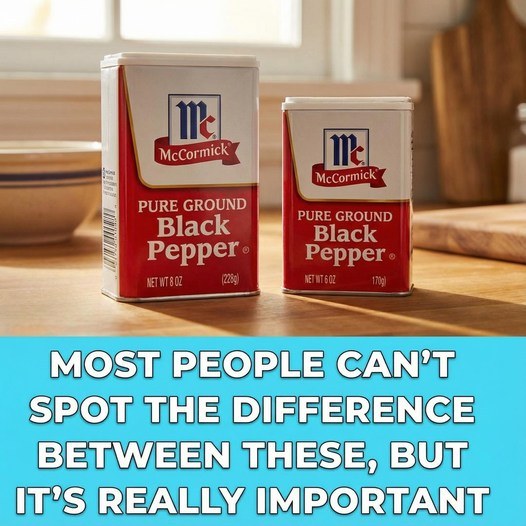
Most People Can’t Spot The Difference Between These, But It’s Really Important
The dispute between McCormick & Company and Watkins Inc. over pepper packaging may appear minor, but it has sparked a broader conversation about transparency, marketing, and consumer trust in the spice industry. The issue began when shoppers noticed that McCormick’s iconic red-and-white pepper tins, long associated with holding around 8 ounces, now contained closer to 6 ounces. Because the containers looked nearly identical to earlier versions, consumers and competitors alike began questioning whether the change could mislead shoppers who rely on visual cues rather than printed labels.
Watkins Inc., a company known for its clear, minimalist packaging, publicly challenged McCormick’s approach. Watkins argued that opaque tins make it difficult for customers to gauge how much product they’re getting, especially when the container size remains familiar despite reduced contents. Their point was not simply about quantity, but about how packaging influences perception.
McCormick countered by emphasizing that all containers display accurate net weight and fully comply with labeling laws. From their viewpoint, no deception exists because consumers have the necessary information on the package. They contend that Watkins is using the controversy to highlight its own packaging advantages, especially at a time when supply chain pressures and rising ingredient costs affect the entire industry.
Still, consumers remain concerned. Many feel uncertain when products look the same but contain less — a growing frustration tied to “shrinkflation.” Some have even pursued legal action, underscoring how seriously people take transparency in everyday goods. While no court decisions have been made, the cases highlight the fragile nature of consumer trust.
The debate also points to a deeper reality: packaging is more than a protective container — it’s a branding tool. McCormick’s tin represents decades of identity, while Watkins builds trust through visible contents. Both strategies appeal to different shopper expectations, but they also reveal how easily visual cues can override printed details.
Ultimately, the controversy serves as a reminder that honesty involves more than listing accurate information. It requires anticipating how consumers interpret what they see. As the discussion continues, one theme remains clear: trust is a brand’s most valuable asset. Maintaining it demands clarity, thoughtful communication, and a willingness to meet consumers’ expectations with transparency rather than assumption.






Post Comment