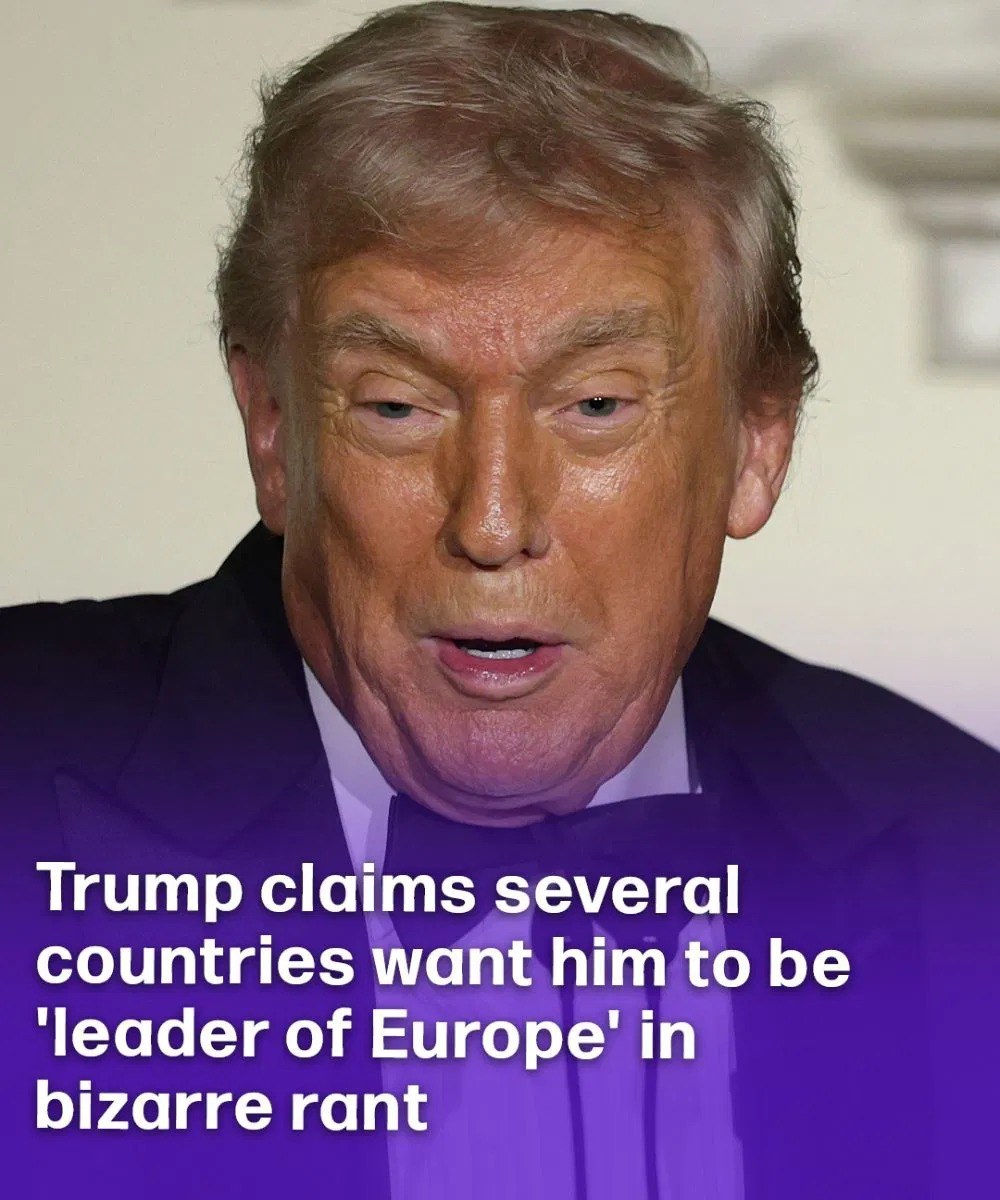
Trump Says Several Countries Want Him to Lead Europe in Bizarre Speech
Former U.S. President Donald J. Trump stirred widespread confusion and debate after remarks made at the White House Congressional Ball on December 11, 2025. During the annual holiday event—typically reserved for festive greetings and reflections on policy—Trump suggested that European countries now view him not only as America’s leader, but as a de facto leader of Europe itself. The comment quickly went viral, prompting sharp reactions across social media and international media outlets.
Trump began his speech with traditional holiday wishes before pivoting to claims about his administration’s economic achievements, including assertions of unprecedented investment flowing into the United States. However, it was his statement that “European countries are saying that your president might as well be the leader of Europe” that drew the most attention. He added that Europe “listens to us and respects us like never before,” framing the claim within his long-standing argument that the U.S. had previously been taken advantage of by foreign nations.
Online reactions ranged from disbelief to satire. Social media users from France, the United Kingdom, and elsewhere openly questioned the claim, with many noting that public opinion polls in Europe often show skepticism toward Trump’s leadership rather than admiration. Others responded humorously, while critics argued the remark reflected an inflated sense of influence disconnected from European political realities.
The comments also followed a recent interview in which Trump sharply criticized European leaders as “weak” and accused them of mishandling immigration, political correctness, and the war in Ukraine. European officials and analysts have disputed these characterizations, emphasizing multilateral cooperation through institutions like the EU and NATO.
Taken together, Trump’s remarks highlight ongoing tensions in transatlantic relations and raise questions about future diplomatic cooperation. Whether viewed as political rhetoric, provocation, or self-promotion, the comments have reignited debate over U.S. leadership, European sovereignty, and the evolving dynamics between longtime allies.






Post Comment