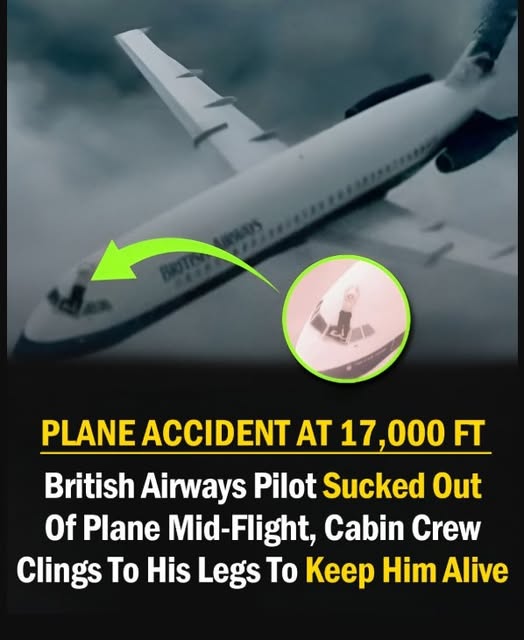
❌Sucked Out at 17,300 Feet!
In 1990, a routine British Airways flight became one of the most astonishing survival stories in aviation history. Captain Tim Lancaster was commanding a BAC 1-11 on a morning flight from Birmingham to Málaga when, at around 17,000 feet, the unthinkable happened. The cockpit windshield suddenly blew outward, causing an explosive decompression that violently tore Lancaster from his seat and forced him halfway out of the aircraft.
Only his legs remained inside the cockpit. The rest of his body was pressed against the fuselage, exposed to deafening wind, freezing temperatures, and dangerously low oxygen. Loose papers and objects were sucked from the cockpit as the aircraft shook violently. With his seat belt snapped and his body pinned at an awkward angle, the situation seemed almost impossible to survive.
Flight attendant Nigel Ogden reacted instantly. Without hesitation, he grabbed the captain’s legs and held on with all his strength. The force of the rushing air battered his body, frost formed quickly, and debris struck him, yet Ogden refused to let go. For nearly twenty minutes, he maintained his grip despite exhaustion and the onset of frostbite.
At the same time, co-pilot Alastair Atchison took control of the aircraft. Remaining remarkably calm under extreme pressure, he reduced speed to lessen the wind force and initiated an emergency descent. His precise handling kept the aircraft stable and prevented further damage. Another flight attendant, Simon Rogers, soon joined Ogden in the cockpit, helping support Lancaster’s legs so Ogden could continue holding on.
The aircraft diverted to Southampton, where emergency crews were waiting. Against overwhelming odds, Captain Lancaster survived, suffering frostbite, shock, and fractures but escaping death. Investigators later discovered the windshield had been fitted with incorrect bolts during maintenance, a small error with nearly fatal consequences.
The incident endures as a powerful reminder that aviation safety relies not only on engineering, but on training, teamwork, and the courage of individuals who act decisively when everything goes wrong.






Post Comment