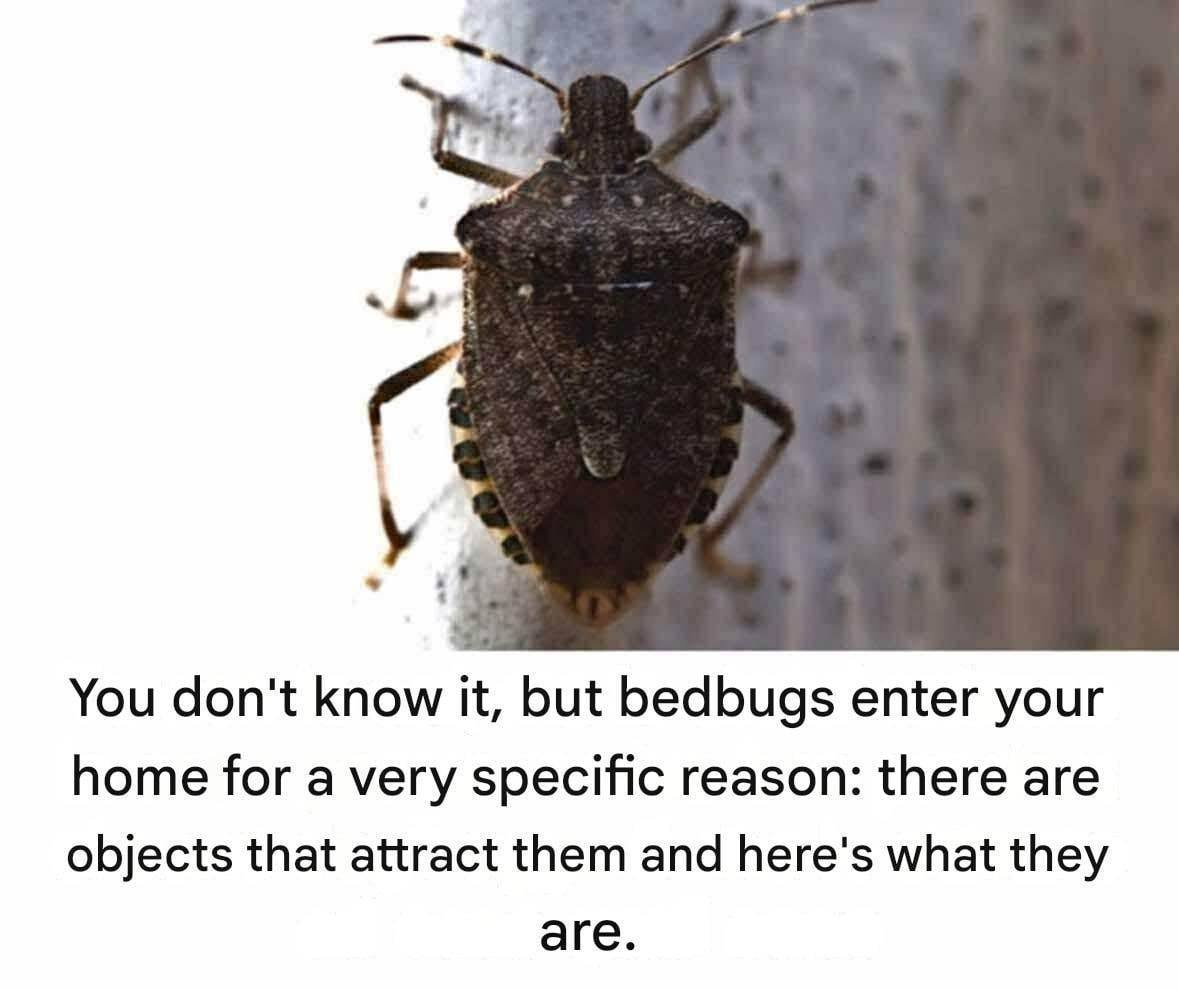
You may not know it, but bedbugs enter your home for a very specific reason: there are objects that attract them and here’s what they are. Find out more below
The article in question is not actually describing bedbugs, despite implying an indoor pest problem. True bedbugs (*Cimex lectularius*) have very specific characteristics and behaviors that do not match the description provided. Bedbugs do not live in gardens or outdoor vegetation, nor are they green in color. They are small, flat, reddish-brown insects that rely almost entirely on human environments to survive. Importantly, bedbugs are not attracted to plants, humidity, or radiators. Instead, they are drawn to the presence of humans because they feed exclusively on human blood.
Bedbugs typically spread through human activity, most commonly by hitchhiking on luggage, used furniture, bedding, or clothing. Once inside a home, they hide in mattresses, bed frames, upholstered furniture, and small cracks or crevices near sleeping areas. Their behavior is closely tied to where people rest, not to environmental factors like houseplants or moisture.
In contrast, the insect being described in the article appears to be *Palomena*, a type of green stink bug. These insects are often mistaken for bedbugs due to their tendency to enter homes, especially in the fall. However, they are entirely different species with different habits. Green stink bugs live outdoors, particularly in gardens and on plants, where they feed on vegetation rather than blood.
As temperatures drop, stink bugs commonly move indoors seeking warmth. They enter houses through cracks, gaps around windows, and other small openings. While their presence can be annoying, they do not infest bedding or bite humans. Additionally, stink bugs are known to be repelled by strong scents such as mint, lavender, and vinegar, which can be used as deterrents.
Overall, the behaviors described align with green stink bugs, not bedbugs, and confusing the two can lead to unnecessary concern and improper pest control responses.




Post Comment