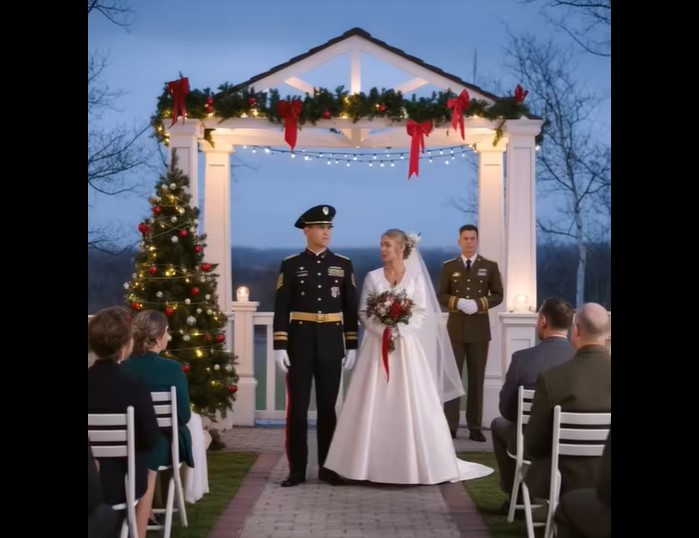
“Marrying a sailor? How humiliating,” my parents scoffed. My brother laughed. “Who would even bother coming to that wedding?” They cut me off completely. – StoryV
I never imagined I’d walk down the aisle alone on my wedding day. At the entrance of Riverside Gardens in Virginia, violin music drifted through the warm evening air, my ivory dress catching the last streaks of sunset. Three front-row chairs sat empty, labeled: Mother of the Bride, Father of the Bride, Brother of the Bride. Cold. Untouched.
No footsteps behind me. No father to give me away. No mother to squeeze my hand. Just the echo of my mother’s voice from that morning: “Marrying a seaman. How embarrassing.” My brother’s cruel laugh: “Who’d even show up to that wedding?”
I walked anyway. Because sometimes the family you choose matters more than the one you’re born into.
Weeks earlier, I, Grace Turner, lieutenant commander in the Navy, met Ethan Brooks on the USS Harrington. He was a seaman in engineering, grease smudged across his cheek, eyes like storm clouds. He led me below decks, explained a stuck valve, solved problems I hadn’t even noticed, all with calm certainty. Humility and brilliance wrapped together. I was captivated.
We met again. And again. Walks on the pier turned into confessions. Moonlight caught the first kiss I’d waited years for. Months later, he proposed quietly, with nervous hope in his eyes. I said yes immediately.
Telling my family should have been easy. Instead, their calls and visits were laced with judgment. My mother, my father, my brother—each reminded me I was marrying “beneath” myself. “Call it off,” my father said. “You’re making an emotional decision,” my mother sneered. My brother laughed. My heart hardened. “Whether you come or not,” I said, “I’m marrying him.”
The week of the wedding, I called once more. My mother hung up on me. My father and brother were absent. The morning of the ceremony, I sipped lukewarm coffee, trying to steady my nerves. My best friend Heather arrived with donuts and smiles. Guests trickled in: sailors, friends, neighbors. Not my family, but people who cared.
I carried the three empty-chair signs outside, acknowledging, not judging. Master Chief Wilcox offered his arm. “Your family doesn’t know what they’re missing,” he said. Together, we walked the aisle. Ethan waited beneath the pergola, uniform crisp, eyes soft. I saw the empty chairs, but I also saw the crowd who showed up, who mattered.
The ceremony was simple, honest, beautiful. Laughter, tears, vows spoken clearly. A candid photo captured me brushing a leaf from Ethan’s hair, laughing under the pergola lights.
Months later, Ethan’s engineering prototype prevented flooding aboard the Harrington. The Navy segment aired nationally, and suddenly my parents’ phones exploded. Missed calls, texts: “Why didn’t you tell us?” “Incredible.” “We’re proud of you both.”
They arrived at our small apartment in Norfolk the following weekend, dressed immaculately, careful. My mother smiled too warmly. My father extended a handshake. My brother tried jokes. We talked. We listened. We were honest. Reconciliation didn’t come overnight, but a foundation was laid—not on status or prestige, but truth.
I realized then: this story was never about empty chairs, a TV segment, or social approval. It was about dignity, love, and choosing people who show up when it counts. About marrying for connection, not pedigree. About walking my aisle with my head held high—even alone—and trusting life to prove I chose wisely.
That’s the real victory. Not vindication, but peace. Not applause, but truth. And the quiet certainty that love—steadfast, patient, unjudged—was enough.






Post Comment