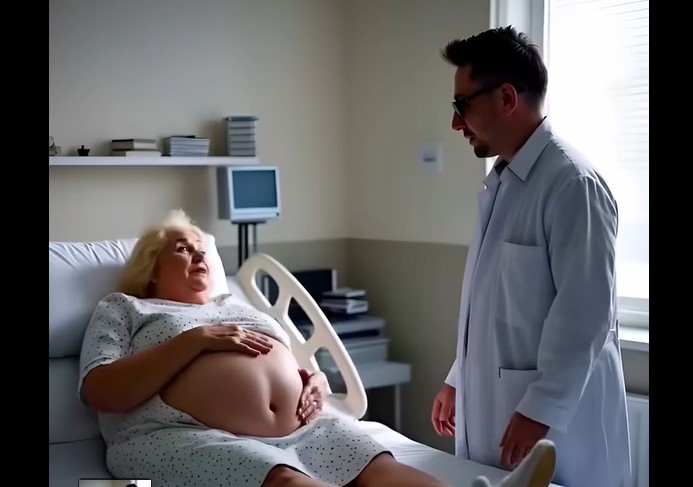
A 56-year-old woman found out that she was pregnant: but when it was time to give birth, the doctor examined her and was shocked by what he saw – StoryV
The morning light slipped through the lace curtains of Margaret Hartwell’s small apartment, illuminating a life shaped by quiet routines and long-held acceptance. At fifty-six, Margaret had made peace with solitude—or so she believed. Then she saw the pregnancy test.
Two pink lines stared back at her.
Her hands trembled as hope, long buried, surged to life. Margaret had spent decades teaching elementary school, pouring love into other people’s children while mourning the child she never had. Her marriage had dissolved years earlier under the weight of infertility, and acceptance had come slowly, painfully.
Yet here it was—an impossible miracle.
Over the next weeks, test after test confirmed it. Margaret cried in her car, laughing through tears, whispering gratitude to an empty seat. She changed her habits, took vitamins, spoke softly to her belly. As months passed, her body changed—swelling abdomen, fatigue, nausea. Every sign reassured her.
Distrustful of modern medicine after years of failed fertility treatments, Margaret chose minimal care. She visited an elderly doctor who relied on traditional methods and encouraged her to trust her body. And Margaret did—completely.
She prepared a nursery. She chose names. She dreamed.
By September, she believed labor had begun. But her doctor was suddenly unavailable, and Margaret was sent to the county hospital. There, a young obstetrician, Dr. Chen, examined her—and frowned. He could find no heartbeat.
An ultrasound was ordered.
Margaret watched the screen, waiting for the image she had imagined for months. Instead, silence filled the room.
“There is no baby,” the senior doctor said gently. “You have a large abdominal tumor. Your body produced pregnancy hormones. Your mind filled in the rest.”
The words shattered her world.
The tumor—benign but massive—required immediate surgery. When Margaret awoke, her belly was flat. The miracle was gone. Or perhaps, she realized numbly, it had never existed at all.
Recovery was swift physically, but emotionally devastating. She mourned a child who had never lived, a future that had felt achingly real. The nursery became unbearable. Slowly, she dismantled it, donating every item.
With therapy and time, Margaret began to heal. She returned to teaching. She joined a support group. She learned that grief did not require proof to be valid.
Months later, she made an unexpected choice—she applied to become a foster parent.
That was how Michael entered her life. Thirteen. Guarded. Brilliant. Unwanted by most families.
Margaret offered patience, consistency, and quiet belief. Over time, trust formed. The nursery became a study. The ache in her heart softened into purpose.
One evening, Michael asked if temporary things were more beautiful because they didn’t last. Margaret smiled, realizing how far they had both come.
She had never given birth—but she was a mother.
The miracle she once believed in had been an illusion. The miracle that followed was real: healing, love, and a child who needed her just as much as she needed him.
Sometimes, Margaret learned, miracles don’t arrive as answers—but as transformations.






Post Comment