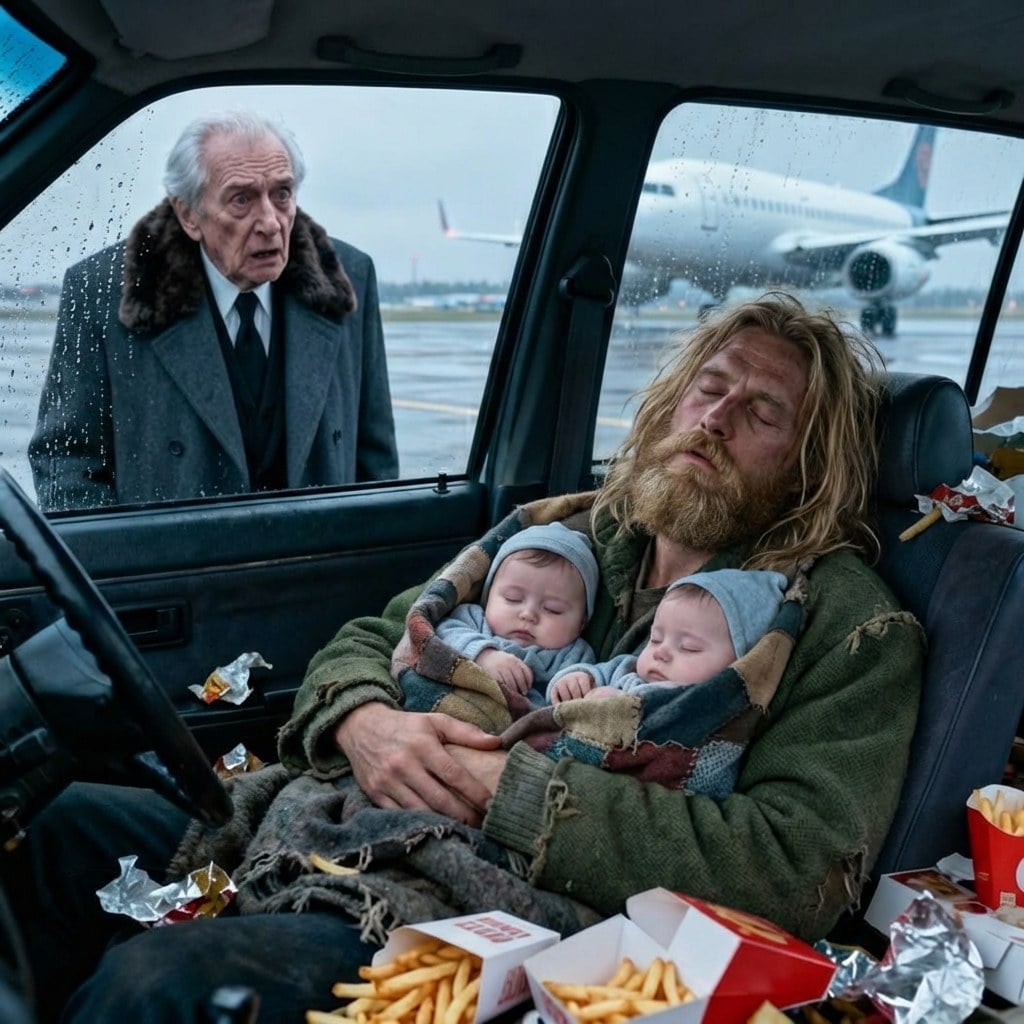
At the airport parking lot, I found my son sleeping in his car with his twins. I asked, “Where is the $150K I invested in your startup? – Story
The March wind cut through the long-term parking lot at Toronto Pearson Airport—quiet, sharp, unforgiving. I’d just landed after an overnight flight, tired but alert in that strange way exhaustion sharpens the mind. I hadn’t told my son I was coming. Michael was turning thirty-six, and I wanted the surprise to be simple.
Then I saw the car.
A Honda Civic sat near a concrete divider, its windows completely fogged from the inside. In a Canadian winter, that means only one thing: too much breath in too small a space.
My stomach dropped.
As I approached, the signs multiplied. Blankets shoved against the rear window. Fast-food wrappers on the ground. A small sneaker lying sideways on the back seat floor.
I wiped a patch clear on the glass.
Michael was slumped in the driver’s seat, asleep, thinner than I remembered. And in the back seat, curled together under one blanket, were my grandsons, Nathan and Oliver. Shoes still on. Kids only sleep like that when they’re afraid they’ll be told to move.
I knocked hard.
Michael jolted awake, panic flashing before recognition set in. What followed wasn’t relief.
It was shame.
“Dad?” he whispered.
Cold air rushed in as he opened the door. One of the boys stirred but didn’t wake.
“Why,” I asked, my voice cracking, “are you living in a car with my grandsons?”
An hour later, we sat in a diner near the airport. The boys slept beside us, pancakes untouched. Michael wrapped both hands around his coffee like it was keeping him upright.
“They took everything,” he said quietly.
I listened.
His wife had him sign documents “for stability.” Her parents handled the lawyers. Then came changed locks, a restraining order, claims he was mentally unstable.
“They moved the startup money,” he added, voice breaking. “Your investment. Labeled it marital restructuring.”
Her family had money. Influence. The quiet kind that ruins lives through paperwork.
“I can’t fight them,” he said. “If I do, they’ll try to take the boys.”
Something inside me went cold and clear.
“Maybe you can’t fight them alone,” I said. “But you’re not alone.”
That night, the boys slept in real beds. Heat. Locked doors. Michael sat watching them like they might vanish.
“Pack your things,” I told him. “We’re fixing this.”
By morning, I’d made the call.
“I need the most aggressive family law attorney in Ontario,” I said. “No mediation. Precision.”
Margaret Hale didn’t offer sympathy. She offered strategy. The restraining order was based on a paid phone call, no evaluation. Judges hate that.
An emergency motion followed.
In court, Michael’s wife wouldn’t meet his eyes. Her parents looked confident—until Margaret introduced me not as a father, but as an investor with records.
The restraining order was lifted temporarily. Visitation restored. A forensic review ordered.
Momentum.
Weeks passed. Subpoenas went out. Transfers traced. “Restructuring” looked like extraction.
An offer came. Silence in exchange for limited access.
“No,” Margaret said. “Now they’re nervous.”
Three months after that parking lot, the ruling came down. Funds returned pending investigation. Primary custody granted. False claims dismissed.
That night, we ate pasta together. Nathan raised his glass.
“To home.”
A week later, I flew back. Michael walked me to security.
“I didn’t think I’d survive this,” he said.
“You didn’t survive because you were strong,” I told him. “You survived because you didn’t disappear.”
The car is gone now. But I remember the condensation on the windows—the sign that demanded action.
That morning, I wasn’t just a father finding his son in a car.
I was the line they didn’t expect.
And crossing it changed everything.




Post Comment