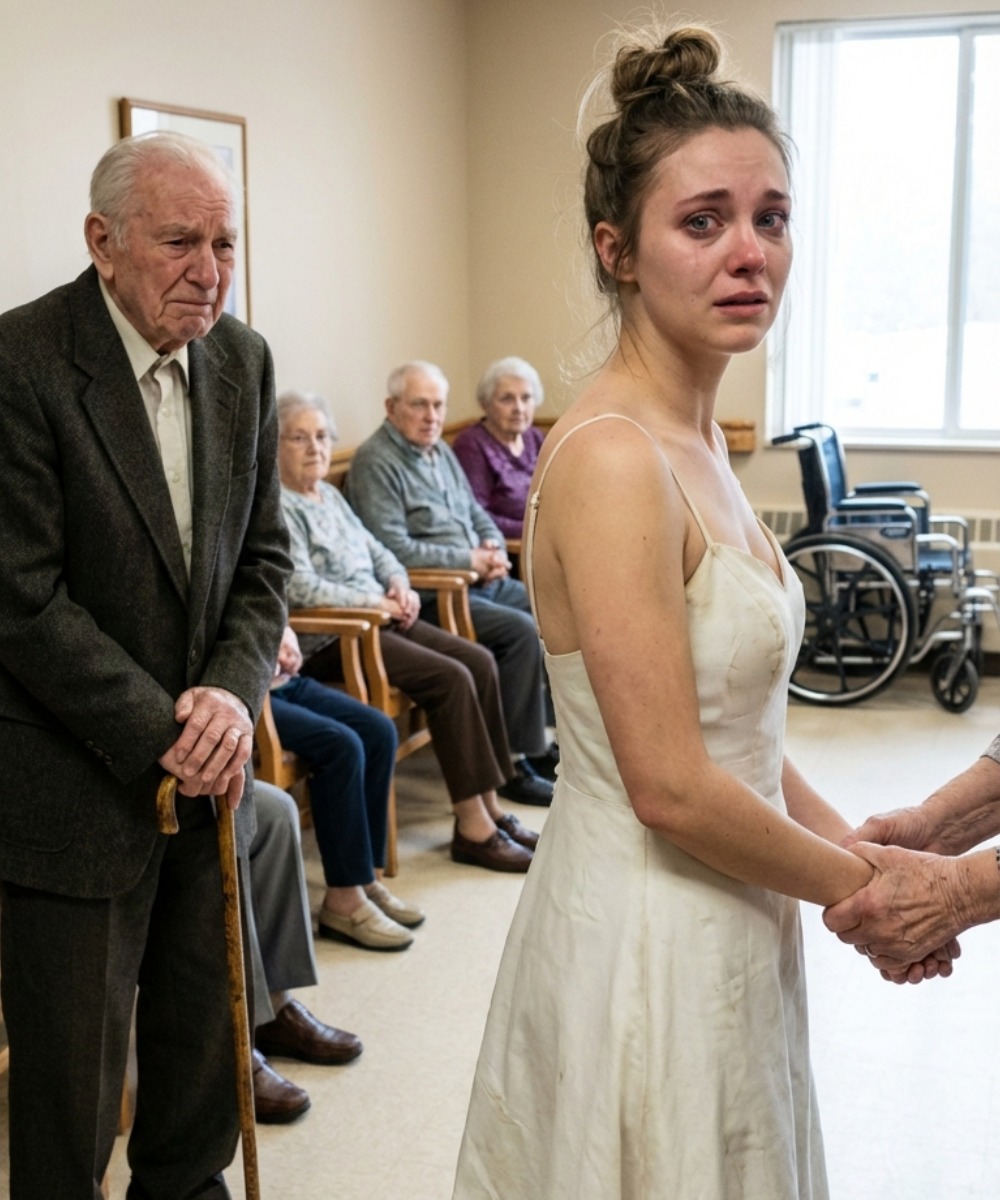
My family boycotted my wedding the moment they learned it would be held inside a nursing home—only so my grandfather could attend. – Story
My relatives boycotted my wedding for one simple reason: we chose to hold it inside a nursing home so my grandfather could attend.
“You’ve humiliated this family,” my father sneered when I told him. Others laughed.
I smiled anyway and walked down the aisle.
The San Gabriel nursing home, just outside Valencia, had never hosted a wedding. Pale walls smelled faintly of disinfectant, softened that morning by flowers and quiet music. I stood beside Álvaro, my fiancé, staring at the empty chairs reserved for my family. Parents. Aunts. Cousins. Not one of them came.
“They could still change their minds,” Álvaro whispered.
We both knew they wouldn’t.
Two weeks earlier, my father had exploded. “A nursing home? Do you want people to think we’re poor? This is shameful.”
Now, residents shuffled in with gentle smiles, and I refused to cry for people who chose pride over love.
Halfway through the ceremony, a cane tapped sharply against the floor. My grandfather Manuel, seated in the front row, was slowly standing. A nurse rushed toward him, but he lifted a trembling hand.
“Please,” he said. “Let me speak.”
The room went silent.
“Many people wonder why this wedding is here,” he began. “Some laughed. Some were ashamed. But they don’t know the truth.”
My chest tightened.
“I didn’t disappear because I chose to,” he said steadily. “I disappeared because someone decided I should.”
He looked directly at the phone recording the ceremony, knowing the video would reach those who stayed away.
“Twelve years ago, my own son placed me in this nursing home,” Manuel continued. “He signed papers while I was hospitalized. He declared me incapable—while my mind was clear.”
The silence turned heavy.
“She is the only one who has visited me since,” he said, pointing at me. “That is why this wedding is here. Not out of pity. Out of truth.”
Wherever my family was watching, their laughter ended.
That night, my father called three times. I answered the third.
“What did your grandfather say?” he demanded.
“He told the truth,” I replied, and hung up.
Growing up, I was told my grandfather had “faded away” after my grandmother died. That the nursing home was for his own good. But when I turned eighteen and visited him, he looked straight at me and said my full name.
That’s when I started asking questions.
Medical records. Old neighbors. A notary friend. Every trail led to the same answer: my father had engineered it all to control the house and accounts.
“I trusted him,” my grandfather once said quietly. “I didn’t know I was signing my life away.”
When he finished speaking at the wedding, the officiant asked gently if we wished to continue.
“Yes,” I said, without turning around.
Because some truths deserve witnesses.
Two days later, a lawyer contacted us. Transfers, forged signatures, and a manipulated medical report surfaced. My father and uncles were summoned.
“We were trying to help,” one said.
“Help each other,” the judge replied.
The ruling declared my grandfather’s confinement unjustified. He left the nursing home walking slowly but upright. He never returned to the family house.
He bought a small apartment near the sea. We painted the walls. Ate paella on the floor.
“I don’t want revenge,” Manuel said. “I just want dignity.”
My father stopped calling. He lost respect, then his job. I didn’t celebrate. I just wanted the lies to stop.
My grandfather walks the seafront every morning now. He laughs again.
A year later, we celebrated his seventy-eighth birthday. Friends came. Apologies followed. My father didn’t.
It didn’t hurt like I thought.
Because family isn’t who shares your blood—it’s who doesn’t hide you when you’re inconvenient.
We donated to the nursing home and placed a small plaque in the garden:
“A wedding was celebrated here for love and truth.”
And when people ask why we married there, I smile.
I’m not ashamed of anything anymore.





Post Comment