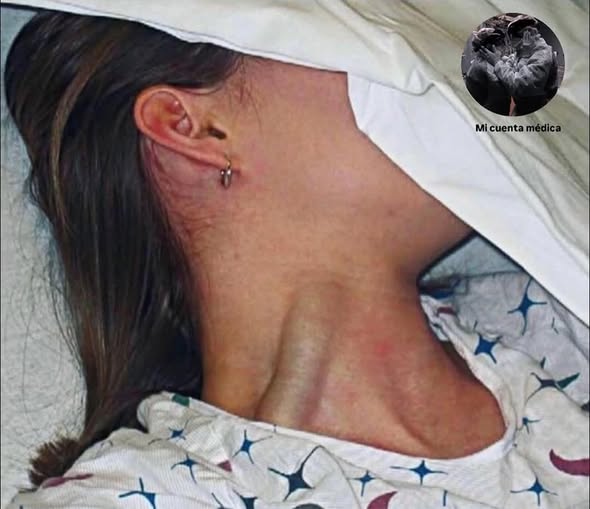
Massive jugular distension: a warning sign you should not ignore…See more
If you’ve ever noticed a rope-like bulge pulsing in someone’s neck—especially when they’re sitting upright—you may have seen jugular vein distension (JVD). It’s not just a curious visual—it’s one of the most telling physical signs that something is wrong with the heart, lungs, or major blood vessels.
While mild neck vein visibility can be normal during exertion or lying flat, persistent, pronounced JVD at a 45-degree angle is a red flag. It often signals elevated central venous pressure (CVP)—a sign that blood is backing up because the heart or lungs aren’t doing their job.
And in some cases, it’s a medical emergency.
Here’s what you need to know—so you can recognize it, understand its urgency, and act fast if needed.
🔍 What Is Jugular Vein Distension (JVD)?
The jugular veins are large vessels on both sides of your neck that carry deoxygenated blood from your head back to your heart. Normally, they’re not visibly bulging when you’re sitting at a 30–45 degree angle.
JVD occurs when these veins become engorged and visibly distended, often appearing as bluish, rope-like cords pulsing above the collarbone.
🩺 Clinical note: Doctors assess JVD with the patient at a 45° angle. If the vein rises more than 3–4 cm above the sternal angle, it’s considered abnormal.
⚠️ 4 Life-Threatening Causes of Massive JVD
1. Right-Sided Heart Failure
What happens: The right side of the heart can’t pump blood effectively to the lungs, so blood backs up into the veins—including the jugulars.
Other signs:
Swollen ankles/legs (edema)
Abdominal bloating (ascites)
Fatigue, shortness of breath
Why it matters: Affects over 6 million Americans (CDC). JVD is a key diagnostic clue.
2. Cardiac Tamponade:
What happens: Fluid builds up in the sac around the heart (pericardium), squeezing the heart and preventing it from filling properly.
Classic triad (Beck’s Triad):
JVD
Low blood pressure
Muffled heart sounds
Action needed: Requires immediate drainage (pericardiocentesis) to prevent cardiac arrest (Mayo Clinic).
3. Tension Pneumothorax (Medical Emergency!)
What happens: Air leaks into the chest cavity and gets trapped, collapsing a lung and shifting the heart toward the opposite side.
Other signs:
Sudden chest pain
Severe shortness of breath
Trachea shifted away from the affected side
Rapid heart rate
Action needed: Needle decompression within minutes—this is fatal if untreated (NIH).
4. Massive Pulmonary Embolism (PE)
What happens: A large blood clot blocks blood flow to the lungs, straining the right heart and causing backup.
Other signs:
Sudden sharp chest pain (worse with breathing)
Coughing (sometimes bloody)
Rapid breathing, anxiety, fainting
Why JVD appears: The right heart can’t push blood through the blocked lung arteries.
🩹 How Is JVD Evaluated by Doctors?
Physical exam: Measuring the height of jugular pulsation at 45°
Ultrasound (echo): Checks heart function, fluid around the heart, and valve issues
CT scan or CT angiogram: For suspected PE or pneumothorax
Chest X-ray: May show enlarged heart, fluid, or collapsed lung
Blood tests: BNP (for heart failure), D-dimer (for clots)
💡 Note: JVD is not diagnosed by patients at home—but noticing it can prompt life-saving care.
❗ When to Seek Emergency Help
Go to the ER immediately if JVD is accompanied by:
Chest pain or pressure
Severe shortness of breath
Fainting or dizziness
Rapid or irregular heartbeat
Bluish lips or skin (cyanosis)
Confusion or extreme anxiety
🚨 Do not wait. Conditions like tamponade or tension pneumothorax can kill within minutes to hours.
❤️ Final Thoughts: Trust Your Eyes—and Act Fast
Jugular vein distension isn’t just a “weird neck thing.” It’s a window into your cardiovascular system—and sometimes, a final warning before catastrophe.
If you notice persistent, pronounced neck vein bulging in yourself or a loved one—especially with other symptoms—don’t dismiss it. Say: “I saw something concerning—can we check this?”
Because in medicine, early recognition saves lives. And sometimes, the most critical sign isn’t pain or fever… it’s a quiet bulge in the neck that says, “Something’s wrong—now.”
💛 Share this knowledge. You never know when noticing a detail like this could help save someone’s life.





Post Comment