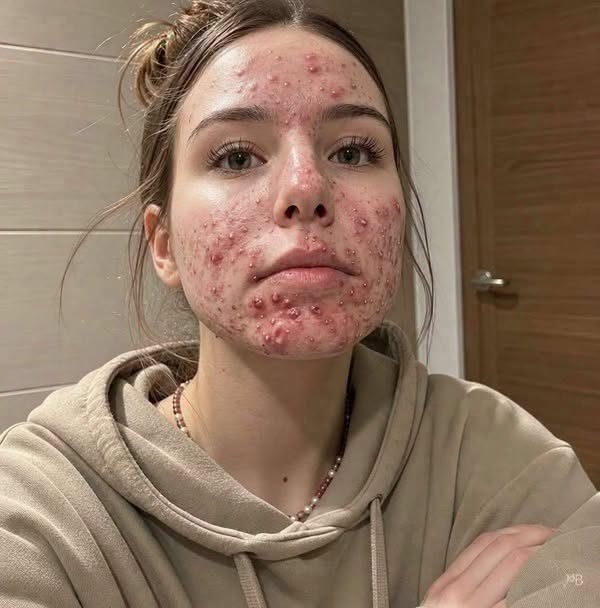
These are the results of sleeping with a… See more
A viral social media post showing a young woman with severe facial breakouts has sparked concern after a dramatic caption suggested that her skin condition was the result of sleeping with someone.
The photograph shows numerous inflamed bumps, red spots, and visible irritation across the woman’s forehead, cheeks, and chin. While the appearance may resemble inflammatory acne, a photograph alone cannot establish a medical diagnosis or reveal what caused the condition.
Some online claims suggest that sharing a bed with another person can directly cause severe acne. However, dermatologists explain that acne is not contagious and cannot simply be transferred through ordinary skin contact.
Acne develops when hair follicles become clogged with oil and dead skin cells, often involving inflammation and bacteria naturally present on the skin.
Hormonal changes, genetics, certain skincare products, stress, and other individual factors can contribute to breakouts.
Sharing pillows, towels, or bedding may expose the skin to oils, sweat, and irritating substances, potentially aggravating existing skin problems in some individuals. However, this does not mean that sleeping beside someone automatically causes acne.
Certain contagious skin conditions can spread through close physical contact, but they require proper medical evaluation and should not be confused with ordinary acne.
For people experiencing persistent or painful breakouts, dermatologists recommend gentle skincare, avoiding unnecessary squeezing or picking, and seeking professional treatment when appropriate.
The image also highlights the emotional impact of visible skin conditions, which can affect confidence and self-esteem.
Ultimately, dramatic social media captions should never replace medical evidence. Understanding the actual causes of skin problems is far more helpful than blaming an unverified encounter or relationship.







Post Comment