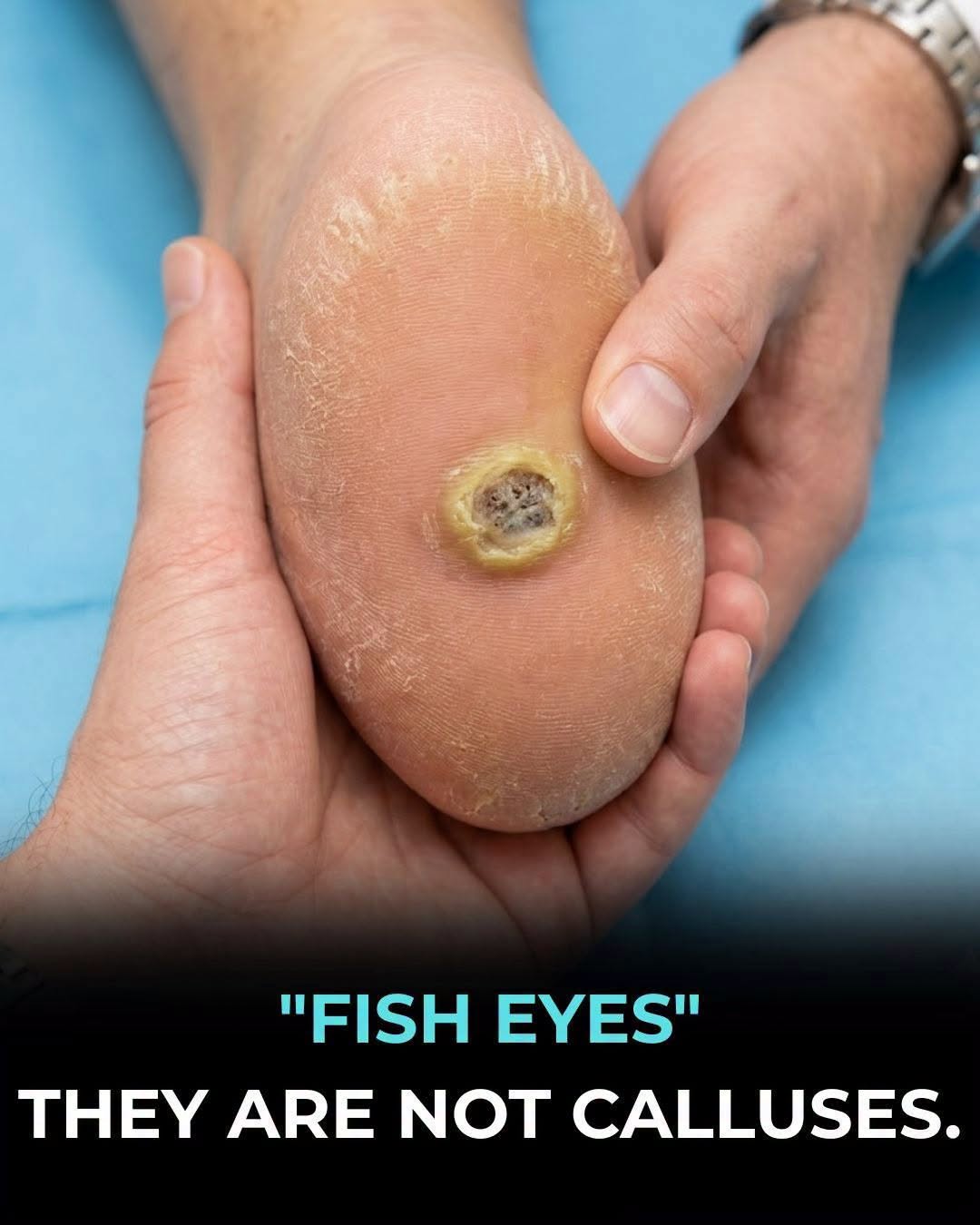
When you get a “plantar callus,” it’s not a common corn; it grows roots and… See more
A small, painful spot on the bottom of your foot might look like an ordinary callus, but it could actually be something completely different.
Commonly known as **“fish eyes”** in some countries, these unusual skin growths are often plantar warts caused by certain types of the human papillomavirus (HPV).
Unlike calluses, which develop from repeated pressure or friction, plantar warts result from a viral infection that enters through tiny breaks in the skin.
**One surprising sign is the appearance of tiny black dots inside the growth.** These are usually small, clotted blood vessels rather than dirt or deeply embedded roots.
Plantar warts can become painful when walking or standing because pressure pushes the growth inward beneath thickened skin.
The virus can spread through direct contact or contaminated surfaces, particularly in communal showers, swimming pools, and locker rooms.
Fortunately, some plantar warts disappear naturally, while others may require treatment with salicylic acid or professional freezing procedures.
However, attempting to cut or dig out the growth at home can cause bleeding, infection, and further complications.
People with diabetes or poor circulation should consult a healthcare professional before attempting treatment.
**So, how can you tell whether that painful spot is a harmless callus or a plantar wart?**
Although certain visual clues can help, a proper medical examination is the most reliable way to identify the condition and choose appropriate treatment.







Post Comment