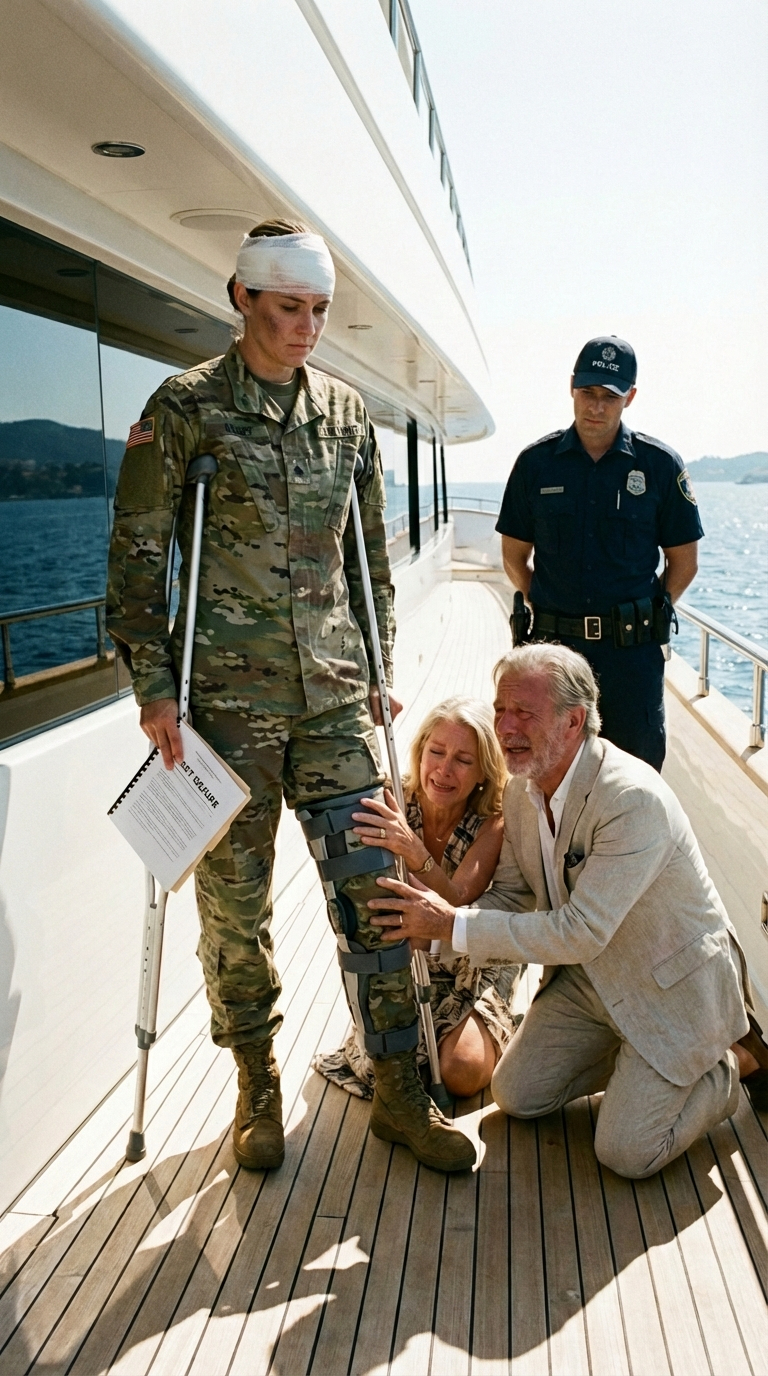
My parents refused when I asked for $5,000 to save my leg. Dad said, “We just bought a boat.” Mom said, “A limp will teach you responsibility.” My sister laughed, “You’ll manage.” Then my brother arrived: “I sold all my tools. Here’s $800.” He didn’t know what was coming. – Story
**The Inheritance of Dignity**
I was still in uniform when my father told me my leg wasn’t worth five thousand dollars.
The doctor had used the word *permanent* if surgery didn’t happen within the week. My knee was swollen tight against my fatigues, my boot unlaced, my future suddenly fragile.
“We just bought a boat,” my father said over the phone. “This isn’t a good time.”
My mother called it a lesson. My sister laughed and said I’d figure it out—I always did.
That was the moment something in me went quiet.
The injury had been ordinary: a training exercise, a misstep under load, a sharp pop that didn’t belong inside a body. At the clinic, the MRI glowed in grayscale while the physician’s assistant tapped the screen.
“You need surgery this week,” she said. “If you wait, you may not walk right again.”
Military approval would take weeks. Weeks I didn’t have.
Five thousand dollars.
I went home on crutches and stared at the ceiling, doing math that refused to cooperate. Credit cards. Loans. Interest rates that bordered on predatory. I signed anyway. I chose debt over disability.
The morning of surgery, as anesthesia pulled me under, I heard my father’s voice again: *You’ll adapt.*
When I woke, my leg was repaired—metal and stitches where ligament had failed. “We got it in time,” the surgeon said. Relief felt like oxygen.
The first loan payment was due three days later.
Recovery was slower than the fear. Physical therapy became routine: balance boards, resistance bands, the careful rebuilding of trust between mind and muscle. “Your body isn’t your enemy,” my therapist said once. I wasn’t sure I believed him.
What surprised me most wasn’t the pain. It was the pattern.
Growing up, my sister was the investment—funded business ideas, refinanced houses, endless second chances. I was the reliable one. When my car broke down at twenty-two and I asked for a loan, my father printed a contract with five percent interest and had it notarized. “It builds character,” my mother said.
Responsibility never bought respect. It only raised expectations.
One night, while icing my knee, I pulled out a lottery ticket I’d bought absentmindedly at a gas station. I checked the numbers twice.
It wasn’t life-changing. It was breathing room.
I didn’t celebrate. I called a lawyer.
“I want my assets protected,” I told him. “And I want to understand my parents’ finances.”
Three days later, he slid a folder across his desk.
The house was over-leveraged. The boat financed on credit. My sister’s business hemorrhaging cash. Taxes precarious. They weren’t wealthy. They were performing wealth.
I could have walked away. Protected myself. Let gravity do the rest.
Instead, I formed a company.
Through it, I bought their debt at a discount—banks prefer clean exits. Quietly, efficiently, I became the entity holding the notes on their house and loans.
They never read the contract closely. Why would they? Rules were for other people.
Months passed. My leg strengthened. I stood without crutches for the first time and realized I wasn’t limping.
Then they missed a payment.
The clause triggered automatically. No grace. No sentiment. I scheduled a meeting.
When I turned the conference chair to face them, recognition dawned slowly.
“I’m the owner,” I said.
My mother whispered that I’d tricked them. My father accused me of betrayal.
“You signed,” I replied.
There was no yelling on my side. No triumph. Just facts. The missed payment. The leverage. The reality they’d skimmed past.
Afterward, I called my brother—the one who had sold his tools and pressed eight hundred dollars into my hand without hesitation.
“Pack your things,” I told him. “I bought the shop.”
Silence. Then a shaky laugh.
The fallout came in quiet pieces: frozen accounts, canceled memberships, a house no longer theirs. My mother wrote about forgiveness. My father said I’d ruined them.
“I didn’t ruin you,” I told him at the final meeting. “I stopped saving you.”
Outside, the air was crisp. I walked to my car on a leg that worked because I chose it, paid for it, fought for it.
They had bought a boat instead of helping their daughter walk.
I inherited something better.
Dignity.



Post Comment