I never told my family that the “quiet, useless daughter” they controlled was the one who actually owned their fortune. At a “private family meeting,” my father slid me a contract, they gathered 23 relatives to force me to sign away $9.8 million to my sister. – StoryV
**The Audience of Twenty-Three**
My father didn’t raise his voice when he told me to sign away $9.8 million to my sister. He whispered. In our house, whispers were verdicts.
“Sign the transfer,” he said, sliding the folder across the oak table. “It’s for the best.”
“I’m not signing.”
The words cracked through the room.
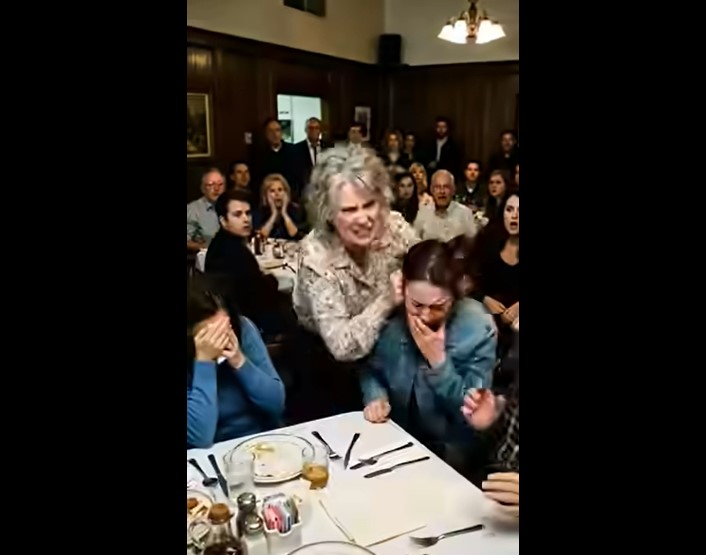
My mother stood so fast her chair shrieked against the floor. Her hand struck my cheek—sharp, public, deliberate.
“You don’t have a choice!”
I tasted adrenaline and something older than pain: recognition. They had gathered witnesses. Twenty-three relatives lined the living room in folding chairs like a jury. This wasn’t a discussion. It was a performance.
Karen sat at the center in soft blue and quiet triumph. She folded her hands like she was already grateful.
The lawyer, Mr. Caldwell, cleared his throat. “Before any signatures,” he said carefully, “there are legal clarifications.”
My father bristled. “These are my assets.”
“Not exactly,” I said.
Silence.
They had invited me to comply. They forgot I’d learned how systems work.
Growing up, Karen was gravity. First grandchild. First praise. First framed certificate. When she cried, my mother rushed. When I cried, I was told I was strong. Strength became a polite way of saying unattended.
Karen’s report cards went on the refrigerator. Mine went into drawers. She changed majors; tuition followed. I asked for help once and got a notarized loan at five percent interest. “It builds character,” my father said.
So I built it somewhere else. I joined the military—not for glory, but for exit. In uniform, documentation mattered. Authority required proof. Missing signatures stalled entire operations. Facts, not feelings, moved outcomes.
During one leave, my grandmother Eleanor handed me ledgers at her kitchen table. “Tell me what you see,” she said.
I saw duplicate repair invoices just under the dual-signature threshold. Consulting fees paid to a company registered to Karen’s husband. Money bleeding quietly.
Eleanor didn’t accuse. She simply watched.
Five years before she died, she acted.
Back in the living room, I unzipped my bag and placed a fireproof folder on the table. The metal clasp clicked.
“I didn’t bring opinions,” I said. “I brought records.”
Mr. Caldwell’s expression shifted from caution to recognition. He lifted the top document.
“This is a recorded deed of trust,” he announced. “Executed by Eleanor. It designates acting authority over the estate.”
My father frowned. “We have a trust. Karen manages it.”
“This predates that one,” Mr. Caldwell replied. “And it bypasses your generation.”
The room tilted.
Karen lunged for the papers. “This is fake!”
Mr. Caldwell caught her wrist midair. “Do not.”
I slid forward the forensic accounting—seven years of discrepancies mapped cleanly. Phantom repairs. Inflated maintenance. Management fees routing back to Karen’s household.
“You knew?” my mother whispered.
“Yes,” I said. “Because you told me I didn’t have a choice.”
Mr. Caldwell looked at my parents. “Your daughter is the acting authority. There is nothing to transfer. Legally, these assets are protected.”
Karen’s husband stood slowly, color draining from his face. “You said it was settled,” he murmured to her.
“It is!” she cried. “She manipulated Grandma!”
“I didn’t,” I said. “Grandma saw what I saw.”
My father sank into his chair, suddenly smaller. “All this time…”
“You assumed,” I finished.
I closed the folder. Click.
“You wanted witnesses,” I said. “Now you have them.”
I left to the smell of lemon cleaner and roast chicken, to the hush of relatives recalculating their loyalties.
The fallout was administrative, not dramatic. Independent management replaced family oversight. Accounts required dual authentication. “Stipends” disappeared. Credit cards declined. The lake house sold. The second car followed. Reality is quiet when it corrects itself.
Two months later, my father asked to meet at a diner we used to visit when we were still a unit.
He looked older.
“I was wrong,” he said without ceremony. “I confused authority with wisdom.”
“You decided for me,” I replied. “You never asked.”
He nodded. “I treated your silence like consent.”
“That’s not the same thing.”
We didn’t discuss money. We discussed roles—how easy it is to reward the child who reflects you and overlook the one who doesn’t. How strength becomes invisibility if you let it.
When we stood, he hesitated. “I’m proud of you,” he said. “You’re a good soldier.”
“I’m not a soldier anymore,” I answered. “I’m just me.”
He smiled, faint but real.
Karen and I are polite strangers now. My mother is slower to thaw. The estate runs efficiently. No drama. Just structure.
Sometimes I think about that oak table and the girl with the burning cheek who was told she had no choice.
She did.
She just needed proof.
And sometimes the most powerful thing you can do in a room full of witnesses is refuse to sign.


Post Comment