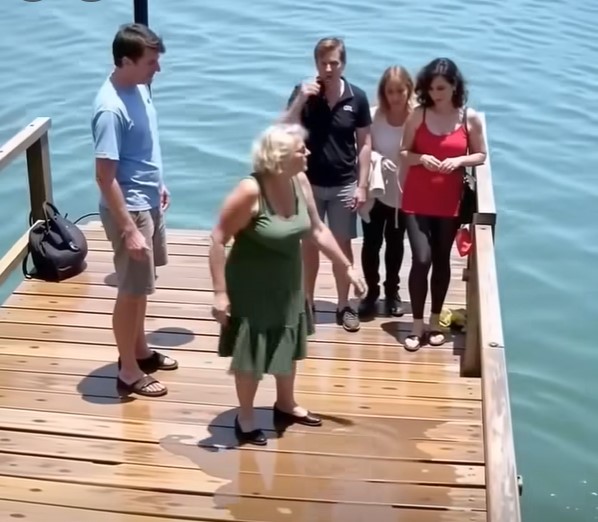
They thought I was fragile and forgetful. My grandson shoved me into the lake, laughing, and my daughter-in-law sneered, “Stop overreacting!” – StoryV
It was supposed to be one of those golden family days, the kind etched into memory with warmth and laughter. A simple afternoon by the lake—no grand plans, no rigid schedule. Just sunlight, open sky, and the easy rhythm of being together.
The sun settled gently on my shoulders, warm but never oppressive, coaxing deeper breaths. A soft breeze skimmed the water, carrying the fresh scent of cut grass, damp earth, and cool lake air. The surface gleamed like a vast, unbroken mirror, reflecting clouds and endless blue.
I stood near the shore, watching my grandson dart back and forth along the edge, his giggles bright and free. That pure, unfiltered joy spread through me like sunlight. In that instant, everything felt right. This, I thought, was the payoff for decades of effort—the late nights, the quiet sacrifices, the steady giving without keeping score. Family, gathered and seemingly content, was the reward I had always believed in.
For years I had held a quiet conviction: family was the one place where love arrived without strings. Respect endured, even as time grayed hair and slowed steps. The care I had poured out would flow back when I needed it. The bonds built through patience and devotion would hold firm when vulnerability came.
That conviction shattered in a heartbeat.
My grandson, caught in a burst of childish energy, gave me a sudden shove. No malice in his eyes—just a playful grin, a miscalculation of force. I teetered, arms windmilling uselessly. The ground disappeared beneath my feet, and I plunged forward into the lake.
The cold hit like a vise. It stole my breath, clamped around my chest, numbed my limbs in seconds. Panic surged—raw, physical, undeniable. I thrashed, clawing for air, for anything solid. My heart hammered as I fought to keep my head above water.
I twisted toward the shore, expecting worry, outstretched hands, my name called in alarm.
Instead, my daughter-in-law stood there smiling.
Not concerned. Amused.
“Don’t be so dramatic,” she said, her voice light, almost teasing, as though my struggle were a minor annoyance.
The words landed harder than the fall. The water bit at my skin, but the deeper pain bloomed inside: the people I loved most did not see a person in danger. They saw fragility. Inconvenience. Something disposable.
I dragged myself onto the bank, clothes plastered to me, body trembling, bruises already forming. Humiliation scorched hotter than the cold. Laughter drifted behind me—casual, careless.
That moment was no accident. It crystallized years of small erosions: impatient sighs when I spoke, jokes that carried an edge, conversations that hushed when I entered a room, choices made about me without me. They had stopped seeing the woman who had built a home from scratch, balanced endless responsibilities, sacrificed dreams so others could thrive. They saw only age. Only weakness. Something to manage.
The lake did not change them. It changed me.
In the weeks that followed, I grew quieter—not from defeat, but from lucidity. I stopped explaining, justifying, proving my worth. I let their assumptions stand unchallenged. And I listened.
They spoke more freely now. Care homes discussed openly in my hearing, as if I were an object to relocate. My finances, memory, decisions dissected like problems to solve. “What to do with her,” they said, reducing a life to a burden.
I documented it all—not for vengeance, but for protection. Dates, words, patterns. Impatience disguised as concern. Contempt wrapped in humor. Kindness offered only when convenient.
They never suspected I had prepared long before. My husband and I, years earlier, had built safeguards with clear eyes. We knew love sometimes failed to shield against entitlement. A trust, carefully structured, preserved dignity rather than rewarding disregard. Documents drawn with intention. Assets secured beyond easy reach.
They assumed silence meant frailty, age meant helplessness. They were mistaken.
When they looked for control, they found accounts emptied by design. Panic replaced confidence. Tension filled the air. Calls went unanswered—my choice.
One day I packed what mattered most and left. No scene, no explanations. Quietly, irrevocably.
They reported me missing. But I was not lost. I was found.
I consulted trusted advisors to lock in protections, ensuring no one who had dismissed me could ever hold power over my life again. What began as humiliation became liberation.
Today I live in a serene senior community where respect is given freely, not earned through constant proof. Mornings find me tending flowers, soil warm under my fingers, sunlight gentle on my face. I share stories with people who listen because they want to, not because they must.
I have learned that true strength is not endurance of pain. It is the courage to walk away from what diminishes you.
Strength can be quiet. It observes, decides, acts without fanfare. Gentleness is often mistaken for weakness, yet it is profound power—the power to stay humane amid cruelty, to choose peace while holding self-respect intact.
I did not battle my family. I did not seek retribution. I chose myself.
Now, when I recall the lake—the icy shock, the laughter that tried to shrink me—I feel no bitterness. Only gratitude. That moment stripped away illusion and revealed a resilience I had nearly forgotten.
What was intended to break me set me free.
This is my quiet triumph.
This is the peace I was always meant to claim.






Post Comment