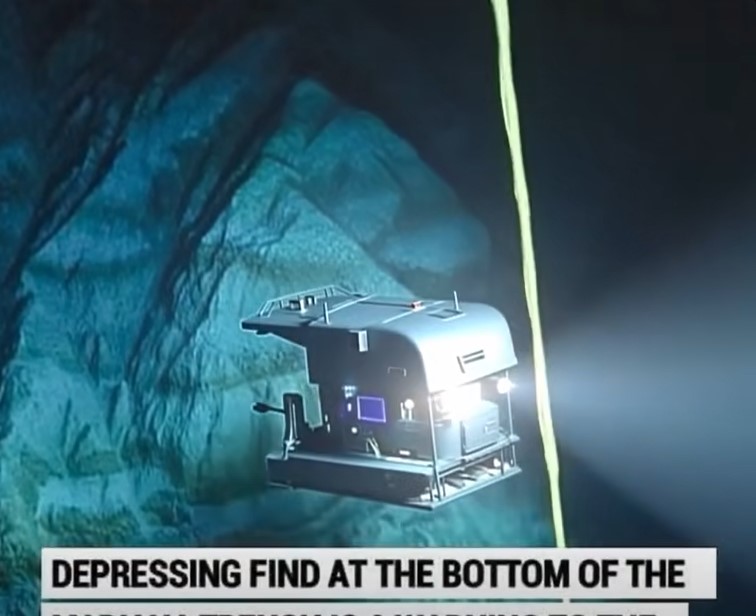
Discovered 35,000 feet beneath the surface in the Mariana Trench… (Check In First comment) – v
For decades, the **Mariana Trench** symbolized Earth’s last untouched wilderness. Nestled in the western Pacific, it plunges to a maximum depth of about 36,000 feet (nearly 11,000 meters) at Challenger Deep—deeper than Mount Everest is tall. Scientists long assumed its extreme pressure, freezing temperatures, and perpetual darkness formed an impenetrable barrier against human impact.
That illusion shattered with the discovery of a plastic bag on the seafloor. First noted in historical data from a 1998 ROV dive and later highlighted in studies, a single-use plastic bag was documented at depths around 10,898 meters (about 35,760 feet). In 2019, explorer Victor Vescovo spotted what appeared to be a plastic bag and candy wrappers during his record-breaking descent to 10,927 meters. This unassuming debris, carried from distant shores, proved no place on Earth escapes human reach.
The Mariana Trench hosts remarkable life adapted to its harsh realm: translucent jellyfish, gelatinous snailfish, giant amphipods, sea cucumbers, and chemosynthetic microbes thriving without sunlight. These ecosystems, stable for millions of years, are fragile—small disruptions carry outsized consequences.
Yet plastic pollution permeates even here. Research from thousands of deep-sea dives shows debris widespread below 6,000 meters, with macro-plastic making up over half in the deepest zones. Strikingly, 89–92% of this plastic consists of single-use items: bags, wrappers, bottles, and packaging. In one analysis, nearly one in five plastic items showed signs of marine life interaction—ingestion, entanglement, or habitat interference.
How does everyday waste reach such extremes? Plastic enters oceans via rivers, wind, and runoff from land. Ocean currents transport it across vast distances. Biofouling—microbes and algae attaching—adds weight, causing it to sink. Gravity and circulation then funnel it into trenches, where it settles indefinitely.
Plastic’s durability worsens the crisis. It fragments into microplastics rather than biodegrading, persisting for centuries or longer. In slow deep-sea conditions, recovery takes decades or centuries—if possible. Organisms ingest fragments, mistaking them for food, leading to blockages, injury, or chemical leaching of absorbed pollutants. These affect growth, reproduction, and survival, with cascading risks in poorly understood ecosystems.
The plastic bag in the Mariana Trench is no anomaly—it’s a stark symbol of interconnectedness. Oceans ignore borders; pollution from one continent harms distant realms. Single-use convenience, repeated globally, accumulates into planetary consequences.
Recent efforts show progress: bans on certain single-use plastics, better waste management, recycling initiatives, and innovations like biodegradable alternatives. Yet policy needs public action. Individuals reduce impact by choosing reusables, disposing waste properly, and supporting sustainable brands.
The deep ocean mirrors humanity’s footprint. Protecting it demands collective responsibility—from science and policy to daily choices. There is no “away” when we discard something; our actions reach the darkest depths.
The Mariana Trench warns of convenience’s hidden costs but also offers hope. By curbing plastic use and embracing stewardship, we can safeguard these hidden worlds. Clean oceans regulate climate, sustain biodiversity, and support life everywhere. The future of even the unseen depends on today’s decisions.






Post Comment