I had just said my final goodbye to my father at his grave when I noticed an elderly woman standing alone by a freshly dug grave. She wore dark glasses and carried a cane. – StoryV
It started as an ordinary morning at the cemetery, six months after my father’s death. The air was crisp with early winter frost, mist drifting over the graves like forgotten breath. I carried white lilies—his favorite—to his headstone, knelt, and whispered the goodbye I’d been carrying too long.
“Goodbye, Dad. I’m sorry for everything left unsaid.”
As I stood to leave, I noticed an elderly woman a few rows away. She moved slowly, white cane tapping the gravel path, dark glasses hiding her eyes. Her shoulders carried the weight of solitude. Something in her careful steps tugged at me.
“Excuse me, ma’am,” I said gently. “Do you need help?”
She turned, a faint, tired smile appearing. “Thank you, dear. My sons were supposed to pick me up, but I think they forgot. Would you walk me home?”
Anger flared—not at her, but at them. How could anyone leave a blind mother alone in a place of mourning? “Of course,” I said.
Her name was Kira. On the short walk, she told me her husband, Samuel, had died recently after forty-two years together. “He was my world,” she said, voice trembling. “Now the ground keeps shifting under me.”
At her modest brick house, roses still bloomed defiantly. The air inside smelled of lavender and honey. Photographs lined the walls—Kira and Samuel young and laughing in Paris, arms linked. She offered tea. I stayed.
“Samuel installed cameras everywhere,” she said casually while the kettle hummed. “He didn’t trust my sons. Said they cared more about what was his than about him.”
The words lingered as I left.
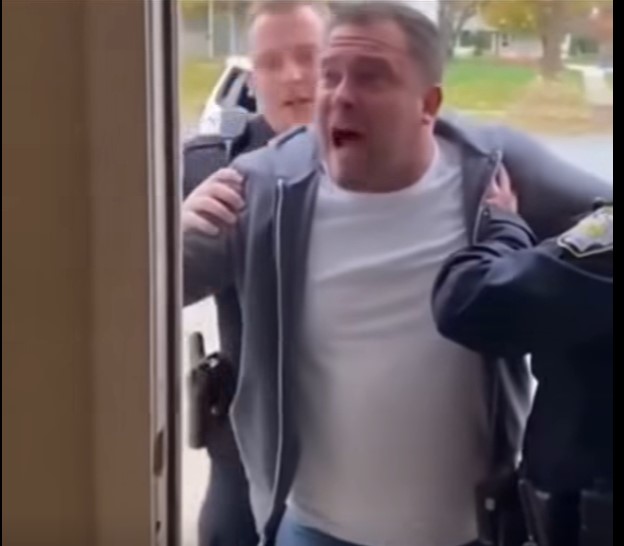
The next morning, pounding shook my door. Two furious men—Ethan and Mark—stood outside with a police officer. “That’s her! She was in our mother’s house yesterday!”
The older one jabbed a finger. “She robbed Mom blind!”
I stammered, “I only walked her home. I didn’t take anything.”
The officer was calm. “Ma’am, we need you to come to the station.”
At the station, Kira sat waiting, cane against her knee. Relief softened her face when she saw me. “Thank goodness. I told them you didn’t do it.”
“Then why am I here?” I asked.
“Because my sons are fools,” she said sharply, turning toward Ethan and Mark. “And greedy.”
She told the officer to check the cameras. An hour later, the footage told the truth: I had helped with tea, said goodbye, and left. Minutes after, the brothers appeared, searching drawers, pocketing cash and jewelry.
“You idiots,” Kira muttered.
Ethan tried, “We were looking for paperwork—”
“In a jewelry box?” the officer cut in.
Mark buried his face in his hands.
The brothers were arrested for theft and filing a false report. Kira squeezed my hand. “I’m so sorry, dear. They’ve always taken more than they gave. Samuel warned me. I didn’t want to believe it.”
In the weeks that followed, I visited often. We shared tea, stories, quiet laughter. Her home, once shadowed by fear, became a place of peace. One afternoon, sunlight through lace curtains, she said, “Maybe Samuel sent you to me. Maybe that’s why you were there that morning.”
When I left, she hugged me gently. “Thank you for being my light.”
Walking home, her words echoed: “Sometimes strangers become family in ways you never expect.”
That morning I thought I was only saying goodbye to my father. Instead, I stepped into a new chapter—one that tested trust, revealed betrayal, and showed me kindness is never wasted. Grief and connection are not opposites; they walk together.
Now, passing the cemetery, I remember not just loss, but resilience. I remember Kira—her strength, her stories, the unexpected bond forged in sorrow. And in quiet moments, I feel my father’s quiet approval: even in darkness, humanity and kindness can still prevail.




Post Comment