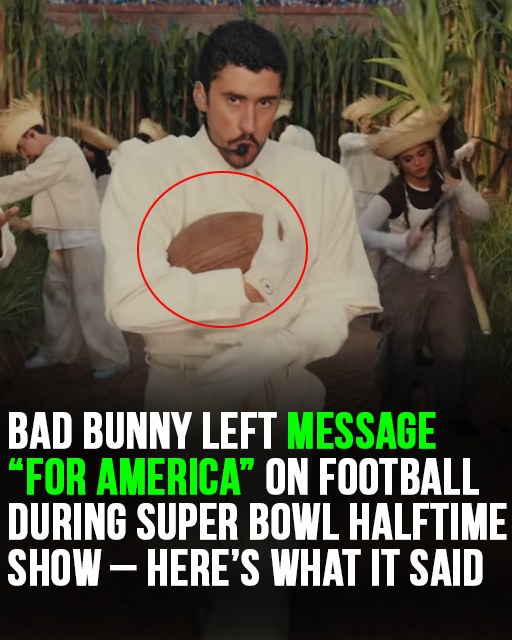
He was holding that football so tightly!!
Bad Bunny’s Super Bowl halftime performance stirred anticipation — and controversy — long before kickoff. In the days leading up to the game, some critics questioned whether his style and musical identity would align with what they believed the halftime stage should represent. A few even urged viewers to tune out altogether.
But once the Puerto Rican superstar stepped into the spotlight, the conversation began to shift.
From the opening beat, the stadium transformed into a surge of rhythm and color. The performance was unapologetically high-energy — pulsing bass, intricate choreography, and bold visuals that filled every corner of the field. Surprise guest appearances drew roaring reactions from the crowd, while camera shots captured fans dancing in the stands.
Notably, the entire set was performed in Spanish. Yet the momentum never faltered. The music’s rhythm, the performers’ charisma, and the spectacle of the production carried the show beyond language barriers. Even viewers unfamiliar with the lyrics could feel the celebration woven into every transition and movement.
Early in the performance, one subtle moment sparked immediate online speculation. Bad Bunny lifted an American football high above his head and held it there for several seconds before setting it aside. Social media lit up with theories. Was it symbolic? Political? A statement about belonging? The mystery lingered as the show continued.
As the finale approached, the answer came into focus.
The football reappeared, now clearly visible on screen. Written across it were the words: “Together We Are America.” Behind the stage, massive screens echoed the sentiment with messages emphasizing unity, inclusion, and shared identity. The imagery blended cultural motifs, city skylines, and cheering crowds, reinforcing a broader theme of connection across communities.
For many viewers, the message resonated. Supporters praised the performance as vibrant, bold, and reflective of the country’s cultural diversity. They applauded its celebratory tone and the decision to center Spanish-language music on one of the world’s largest stages.
Others were less enthusiastic. Some critics argued that the halftime show should remain apolitical or adhere more closely to tradition. Public figures and commentators debated whether the messaging enhanced the performance or distracted from it.
Regardless of perspective, one thing was clear: the show commanded attention.
Within minutes of its conclusion, social media feeds flooded with clips, commentary, and analysis. News outlets dissected the symbolism. Fans replayed their favorite moments. Critics doubled down on their opinions. The halftime performance became one of the most talked-about aspects of the entire event.
Praised by some, questioned by others, Bad Bunny’s appearance proved once again that the Super Bowl halftime stage is more than entertainment. It is a global platform — one where music, culture, and identity intersect, and where a single performance can ignite celebration, reflection, and debate all at once.





Post Comment