When a Holiday Tradition Changed, We Had an Honest Conversation
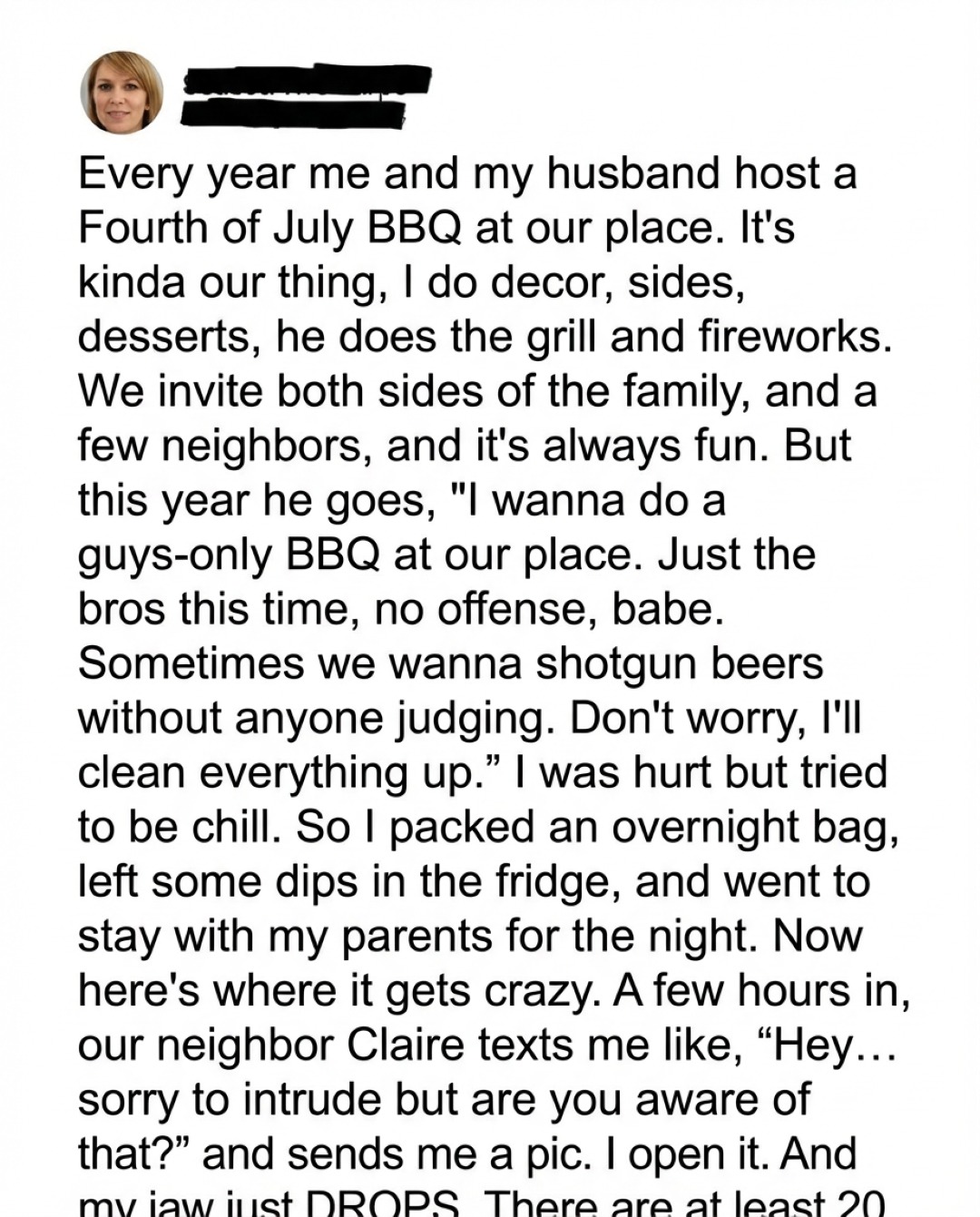
Every year me and my husband host a Fourth of July BBQ at our place. It’s a tradition that grew naturally over time—something we both looked forward to as summer arrived. I handled the decorations, side dishes, and desserts, while he took charge of the grill and fireworks. Family from both sides would come by, along with a few neighbors, and the backyard would fill with laughter, folding chairs, and familiar stories retold under string lights. That rhythm felt like ours, a small but meaningful way to celebrate togetherness. So when he suggested, casually and without much thought, that this year he wanted a “guys-only” barbecue at our house, it caught me off guard. I tried not to show how much it stung. Wanting space is normal, I told myself. Still, the house felt oddly quiet as I packed an overnight bag and went to stay with my parents, leaving behind a few homemade dips in the fridge as a quiet peace offering.
At first, the evening passed uneventfully. My parents’ house was calm, familiar, and safe, yet my thoughts kept drifting back to the glow of our backyard and the sound of fireworks I wasn’t there to hear. I reminded myself that relationships change, traditions shift, and compromise matters. Then, a few hours in, my phone buzzed. It was a message from our neighbor, Claire—polite, hesitant, and clearly uncomfortable. She asked if I was aware of what was happening at our place and attached a photo. I stared at the screen longer than I meant to, my heart beating faster, not from anger but from confusion. The image didn’t show anything inappropriate—just a backyard far more crowded than expected, filled with people I didn’t recognize, including several women I’d never met.
After the initial surprise faded, something else took its place: clarity. This wasn’t about a party getting out of hand or broken rules. It was about communication. The issue wasn’t who was there—it was that I hadn’t been included in the decision or the truth. I didn’t rush home or confront anyone that night. Instead, I sat quietly and thought about how easy it is for small misunderstandings to grow when left unspoken. Traditions aren’t just events; they’re agreements built on shared expectations. When those expectations change, the way we talk about it matters more than the change itself.
The next morning, we talked. Not loudly, not defensively, but honestly. He admitted he hadn’t thought through how his words would land or how excluding me—even unintentionally—might feel. I shared how the situation made me question whether “ours” still meant what I thought it did. We listened, really listened, and by the end of the conversation, nothing dramatic had happened—but something important had. We reset. Traditions can evolve, but respect has to stay constant. That Fourth of July didn’t end our marriage or spark a dramatic turning point. Instead, it reminded us that the strongest relationships aren’t built on perfect moments, but on the willingness to pause, reflect, and choose each other again—clearly, and together.






Post Comment