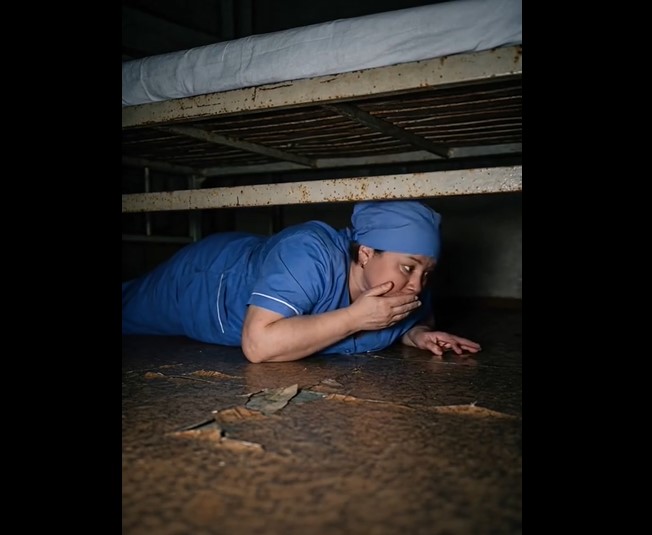
EVERY NIGHT, THE ORDERLY HEARD SCREAMS FROM ROOM NO. 7 WHENEVER AN UNKNOWN MAN VISITED THE ELDERLY PATIENT. ONE DAY, SHE COULD NO LONGER STAND IT AND HID UNDER THE BED TO UNCOVER THE TRUTH. – StoryV
The hospital corridors had a rhythm all their own. By day, they bustled with beeping monitors, rolling carts, and hurried footsteps. Visitors’ voices mixed with patients’ laughter, a fragile attempt to keep spirits up. But at night, after the shifts changed, the halls emptied. Fluorescent lights cast long shadows across linoleum floors, and the hum of the building became hypnotic.
It was during these quiet hours that the orderly noticed something unusual. From Room No. 7, where Mrs. Evelyn Thompson, an elderly woman recovering from a broken hip, stayed, faint, muffled screams began to echo—soft, suppressed, desperate sounds no one else seemed to hear. Each night, they came at the same hour, after the evening routine had settled and the rest of the hospital drifted toward sleep.
Mrs. Thompson had always been polite, quiet, cooperative. But lately, subtle changes appeared: flinching at sudden noises, avoiding eye contact, clutching her sheets with tension. Then a man began visiting each evening—polished, calm, claiming to be a relative. After his visits, Mrs. Thompson’s eyes were red, her hands clammy, and once, the orderly spotted a faint bruise on her wrist. When questioned, she whispered reassurances: “It’s fine.” But the tears, trembling hands, and nightly screams said otherwise.
Colleagues warned the orderly against intervening. “He’s family. Stay out of it,” they said. Yet she couldn’t ignore it. Night after night, she observed patterns: the visitor arrived at the same time, stayed the same duration, and left only after ensuring Mrs. Thompson remained in bed. Fear slowly gave way to resolve.
One evening, she arrived early, slipping into the dimly lit room before the visitor. Mrs. Thompson lay tense but seemingly asleep. The orderly crawled under the bed, pressing against cold linoleum, waiting. Minutes stretched like hours. Then the door creaked. From her hidden vantage, she saw the visitor’s polished shoes and heard him coax Mrs. Thompson about signing away a house. When she refused, he grew forceful.
Suddenly, he revealed a dark, unmarked syringe. The orderly’s heart stopped. Mrs. Thompson protested silently, but he threatened her—claiming he could manipulate her health if she refused. The syringe rose. Panic surged, adrenaline spiking. She knew she had to act.
With a surge of courage, she bolted from under the bed, screaming. Staff rushed in immediately. The visitor was detained, the syringe confiscated, and documents intended to coerce Mrs. Thompson revealed. His plan to weaken and control her had been stopped.
Mrs. Thompson survived, gradually regaining health and confidence. The orderly became a quiet hero, praised for her vigilance and moral courage. Hospital protocols were revised, emphasizing observation, reporting, and advocacy for vulnerable patients.
Her bravery reminded everyone that heroism doesn’t require special training—only attention, conscience, and action. One ordinary individual, noticing what others overlooked, prevented harm and exposed a dangerous plan.
In the dim corridors, under the hum of fluorescent lights, her courage became a beacon. It was proof that vigilance and compassion, coupled with decisive action, are often the thin line between danger and safety, despair and hope.






Post Comment