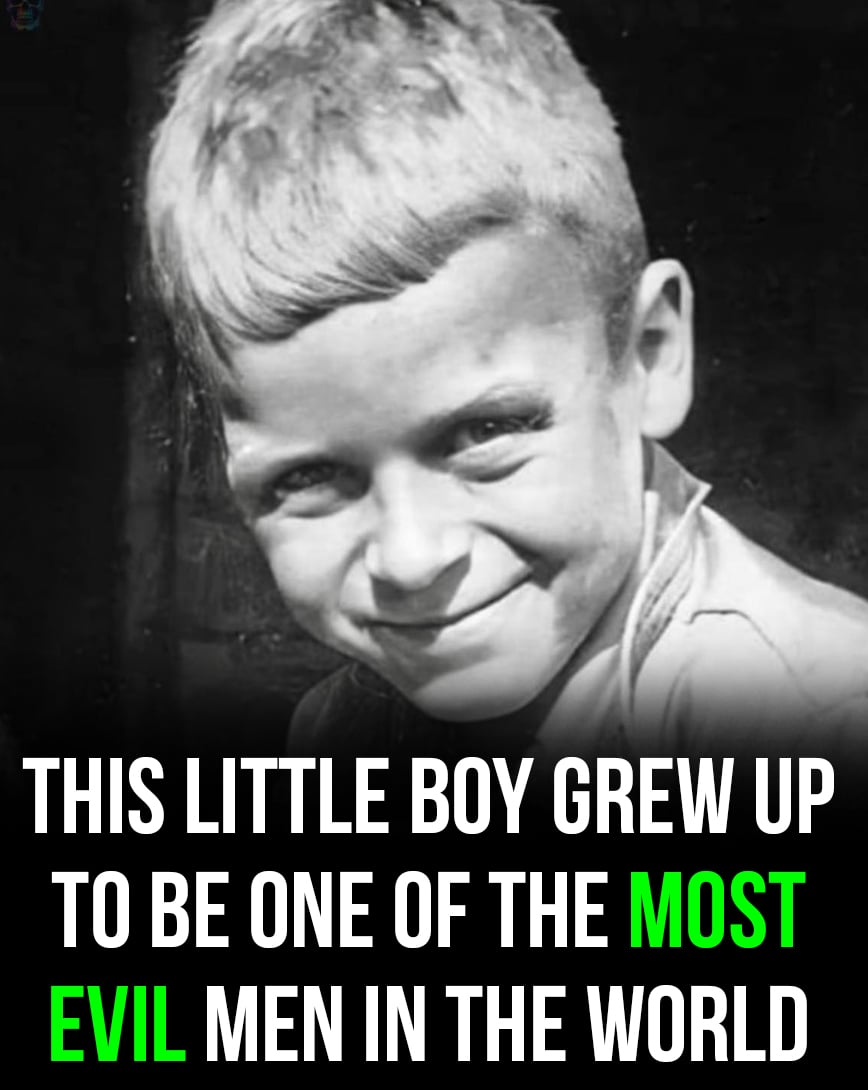
Everyone knows him, but one can name him 😳
He looked like any other awkward kid.
He had a paper route. He went to Scout meetings. He wore a shy smile that made teachers describe him as “quiet” and neighbors call him “polite.” From the outside, there was nothing remarkable about him—nothing that hinted at the darkness quietly taking shape beneath the surface. But inside his home lived a lie so deep it distorted his sense of identity from the beginning.
Ted Bundy grew up believing his grandparents were his parents and his mother was his sister. The truth of his birth—concealed in shame and secrecy—hovered over his childhood like a silent fracture. When he eventually learned who his real mother was, the revelation did not come with healing or clarity. It came with confusion, humiliation, and a private unraveling. Those early deceptions did not create a killer on their own, but they formed a psychological landscape marked by instability, resentment, and a craving for control.
Bundy’s story remains one of the most disturbing collisions of normalcy and horror in modern history. He was intelligent, articulate, even charismatic. He studied law. He volunteered in political campaigns. He blended into college campuses and courtrooms with unsettling ease. That was his greatest weapon: he looked safe.
Behind the charm, however, something colder was hardening. Rejection cut deeply. Perceived slights lingered. Relationships became battlegrounds for dominance. Over time, fantasy blurred with reality, and violence became both an outlet and an assertion of power. The same qualities that helped him navigate social spaces—confidence, calculation, emotional detachment—also allowed him to manipulate, deceive, and ultimately destroy.
Bundy did not fit the caricature of a monster. He did not lurk in shadows muttering threats. He smiled. He asked for help. He pretended to be injured to lower defenses. He understood trust, and he exploited it. The ordinary face he presented was not a disguise he struggled to maintain; it was part of who he was. That duality is what continues to disturb people decades later. If someone so seemingly normal could commit such acts, what does that say about how we recognize danger?
In the end, Bundy offered no genuine clarity. His confessions came in fragments—strategic, shifting, sometimes self-serving. He alternated between denial and partial admissions, as if control over the narrative mattered as much as control had once mattered over his victims. Even in his final hours, he crafted his image carefully. His last words included a calm, almost tender goodbye to “family and friends,” a closing line that felt chilling in its absence of true accountability.
Outside the prison where he was executed, crowds cheered. For some, his death symbolized justice. For others, it marked only the end of a long nightmare. But celebration could not fill the silence he left behind. In countless homes, there remains an empty chair at the table, birthdays that go uncelebrated, futures that were never allowed to unfold.
Bundy’s legacy is not his notoriety, nor the mythology that has grown around his name. It is the lives he stole and the families forever altered. His story endures not because of fascination with evil, but because it forces an uncomfortable truth into the light: sometimes horror does not announce itself. Sometimes it delivers newspapers, studies law, smiles politely—and waits.
That is what unsettles us most. Not just what he did, but how ordinary he seemed while doing it.






Post Comment